Get Full Government Meeting Transcripts, Videos, & Alerts Forever!
Get email alerts on the Legislative Committee topic
No spam. Unsubscribe anytime.
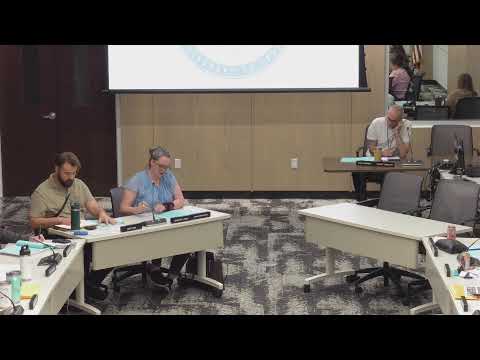
Champaign County board debates creating standing legislative committee to speak for the county
Summary
At a Committee of the Whole meeting, board members debated forming a short-term task force or a standing legislative committee to coordinate county responses to state and federal bills, citing recent and proposed legislation affecting counties and raising staff-capacity and cost concerns.
The Champaign County Board Committee of the Whole debated whether to form a short-term task force or a standing legislative committee to coordinate the county’s responses to state and federal legislation and to act as a unified voice in Springfield.
Chair Lock opened the discussion, saying the board previously added the topic to the agenda and wanted to take the board’s temperature before staff developed options. "I want something that will be able to speak for Champaign County," the chair said, describing the goal of a body that could vote and take positions on legislation.
Board member Farney and others urged a standing committee rather than a temporary task force. Farney said counties increasingly are affected by state actions — from changes in personal property tax replacement funds to zoning and unfunded mandates — and called a committee the best vehicle for laying out an agenda to influence Springfield and Washington.
Board member Forado highlighted specific measures she said the county could influence if it had a standing presence: House Bill 5513 (a power/data-center-related bill), a Senator Rose bill on data-center water protections, and last year’s Senate Bill 25 (the grid reliability act). "If we were wanting to participate in terms of going to testify or entering witness slips, we could actually help shape legislation," she said.
Several members and staff raised practical concerns. Megan, a county staff member, said administrative bandwidth is limited and recommended quarterly meetings or a chair who could take action between board meetings. Board members also discussed whether the committee should include departmental representatives (for example the sheriff or the state's attorney) and whether it should be composed solely of board members or include recurring guests such as the Farm Bureau or mental-health board staff.
Cost and staff time drew pushback. Board member Pew asked about the financial and staff costs, noting the county’s structural deficit and the potential need to pay overtime or hire additional staff. Others said modest, phased steps — for example, using the summer to develop a charter and launching the body at the reorganizational meeting in December — would allow the county to build capacity gradually.
Several members suggested tapping in-house resources for legal and legislative interpretation. Board members noted that the state's attorney’s office could likely support the group and named Andrew Beckett as a potential regular participant.
Chair Lock closed the discussion with a straw poll to proceed with staff work to develop options; members indicated support to continue planning and return with a charter and other details at a later date.
The meeting record shows no formal motion to create a committee or task force was adopted; the board instead agreed to pursue further study and to develop options for future action.