Get Full Government Meeting Transcripts, Videos, & Alerts Forever!
Get email alerts on the Women Peace Security topic
No spam. Unsubscribe anytime.
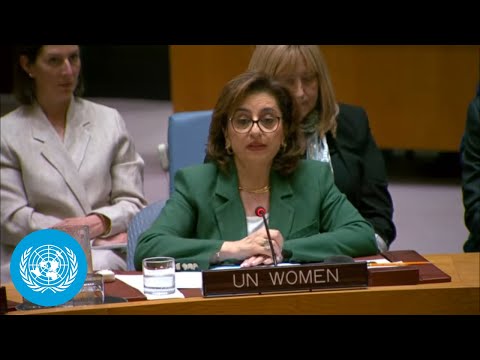
Seema Sami Bahous urges Security Council to protect MONUSCO and back women leaders in the Great Lakes
Summary
Seema Sami Bahous of UN Women told the Security Council that women’s leadership is essential to lasting peace in the Great Lakes region, called for protection of the MONUSCO peacekeeping mandate, and urged sustained support for women- and youth-led civil society, citing Ugandan gains and MSF figures on sexual violence.
Seema Sami Bahous, speaking for UN Women, told the United Nations Security Council that women’s leadership is “unique and transformative” for peace in the Great Lakes region and outlined three specific requests for the Council.
“Without safety, women cannot lead. And without their leadership, peace and recovery efforts fail,” Bahous said, urging members to increase women’s meaningful participation in peacemaking in the Democratic Republic of the Congo and the broader region.
Bahous cited progress in Uganda, saying that in some districts and sub-county peace committees women’s representation “have nearly tripled from 17% in 2022 to 46% in 2025” and that 21 districts now have local action plans on women, peace, and security, 16 of which were supported directly by UN Women. She presented those figures as examples of how women’s inclusion can translate into local prevention and mediation work.
Her second request urged the Council to "protect the peacekeeping mission, MONUSCO, and its critical mandate in the DRC." Bahous said the mission had helped facilitate hundreds of trials against perpetrators of conflict-related sexual violence, protected women human rights defenders, and supported local peace efforts between Hema and Lendu communities in Ituri. She warned of consequences if MONUSCO were removed and noted operational gaps, including that the mission “currently has no senior women's protection advisor and a weakened gender unit.”
Bahous also cited field and humanitarian data to underline risks facing civilians. She said “60% of women human rights defenders in North Kivu” report ongoing direct threats and quoted Médecins Sans Frontières’ finding of “28,000 victims of sexual and gender-based violence in the first half of last year.”
Her third ask called for sustained funding and protection for women- and youth-led civil society groups, which she described as “unappreciated frontline peacebuilding actors” and “critical defense against democratic erosion.” She urged the Council to support these organizations and to protect civic space so local actors can continue prevention and accountability work.
Bahous framed the requests as practical and attainable, arguing that empowering thousands of women peace actors would cost “a fraction of the cost of military spending” while delivering better results. She closed by asking Council members to work together to commit to gender equality and women’s leadership so the region can find lasting peace.
The President thanked Ms. Bahous for her briefing and gave the floor to Council members who wished to speak next.