Get Full Government Meeting Transcripts, Videos, & Alerts Forever!
Get email alerts on the Homelessness topic
No spam. Unsubscribe anytime.
Council presses Catholic Charities on Working Hands budget and outcomes; extension tabled for more detail
Summary
Council members pressed Catholic Charities for clearer line‑item accounting after reviewing year‑one expenditures for the Working Hands workforce program; concerns focused on participant stipends, indirect administrative rates and how housing outcomes are counted. Council voted to table the extension and requested more detailed budget and outcome reporting.
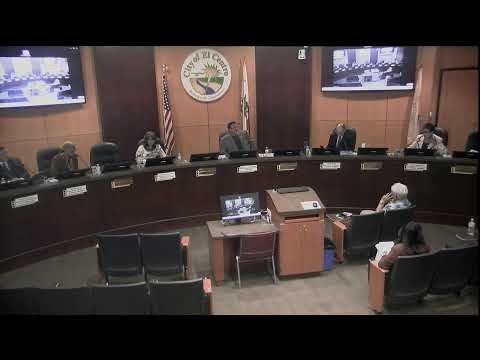
City staff and representatives from Catholic Charities returned to the El Centro City Council to review year‑one expenditures for the Working Hands workforce‑development program and seek approval to extend the contract. The presentation and subsequent discussion consumed much of the meeting as council members probed program costs, accountability and outcomes.
Catholic Charities reported year‑one expenditures of about $204,000 against an earlier two‑year projection that had been larger; the organization said some originally budgeted categories (for example, meals) were not claimed against city funds because they were covered by other grants. Staff explained participant stipends totaled roughly $84,000 (paid via checks, not daily cash), and Catholic Charities said it pays direct salaries for program staff while also applying a federally approved 21% indirect rate to eligible budget lines.
Council members and public commenters repeatedly asked for greater transparency. They flagged several points: the apparent share of funds going to indirect/administrative expenses, whether meals and other participant services were being properly tracked, how and when participants are counted as “housed” (the council clarified that temporary 'bridge' hotel stays do not count as permanent housing unless a lease is signed), and whether the program’s outcomes — placements in housing or sustained employment — were being measured and reported with supporting documentation.
Catholic Charities’ representative said the program is intended to enroll small cohorts (the agency now projects enrolling six participants at a time going forward), to help participants gain income and stability and to connect people to rapid rehousing resources when they qualify. Staff described multiple funding streams that the nonprofit uses for rapid‑rehousing and bridge housing (state ESG, HAP rounds), and said the day center supplements city funding with other grants and private foundation support.
Multiple public commenters expressed skepticism that too much of the grant money went to administrative overhead rather than direct participant benefits. Catholic Charities and staff proposed practical steps to increase transparency: separate signin sheets or meal logs for Working Hands participants, clearer payroll and invoicing detail, and a follow‑up schedule so the council can review revised line‑item budgets.
Following the discussion the council voted to table the extension request, directing staff to work with Catholic Charities to provide a more detailed and auditable budget and clearer outcome metrics before the council considers a renewal.
What’s next: Council asked staff to return with clarified line items, participant meal and attendance tracking, and better documentation of housing and employment outcomes so the council can evaluate program value against other uses of the funding.