Get Full Government Meeting Transcripts, Videos, & Alerts Forever!
Get email alerts on the Budget topic
No spam. Unsubscribe anytime.
City staff preview 2027 supplemental budget, flag $127M levy and choices on fees and parks support
Summary
City staff presented a preliminary 2027 supplemental budget at a study session, reporting a $742.4 million all‑funds plan and a projected $127 million tax levy (about a 7.4% increase). Council questioned equity of fee options, asked for clearer capital and staffing tradeoffs, and asked staff to return with refined proposals in August.
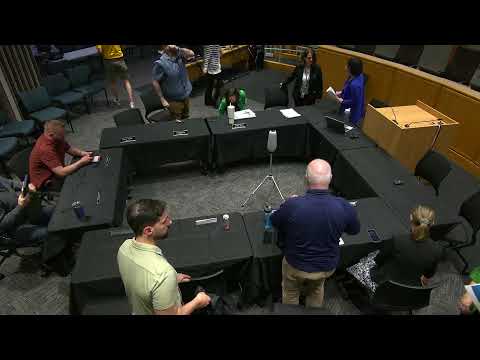
City staff on Wednesday opened the study‑session review for the 2027 supplemental budget, telling the Rochester City Council the preliminary projection for the tax levy is $127 million — roughly a 7.4% increase compared with 2026 — while the general fund is projected to increase about 3.6%.
The city administrator said the full all‑funds budget under discussion totals about $742.4 million, with roughly $411.7 million for operations, $284 million for capital improvements and about $46.7 million for debt service. He noted that higher building‑permit revenues in 2025 are muting the apparent general‑fund increase because much of that income is earmarked for project‑specific expenses.
Why it matters: the levy projection and underlying assumptions drive property‑tax bills across the city and frame tradeoffs for staffing, capital maintenance and other services. Councilmembers asked staff to break out options that would limit levy growth while protecting core services.
Key points and council questions
- Levy and revenue context: The administrator said the budget model incorporates estimated market‑value growth provided by Olmsted County (preliminary valuation adjustments staff described as roughly 3.27% new construction and about 4.3% year‑over‑year market valuation growth). He warned that even a 0% levy can raise individual bills when market values increase.
- Fees and payment processing: Staff reported the city receives a significant share of payments by card (approximately 40% of customers) and absorbs roughly a 1% average processing fee. Councilmembers probed policy options — a flat convenience fee, a percentage with a cap, or absorbing the cost in departmental budgets — and emphasized equity and behavioral impacts (whether customers would revert to checks).
- Parks and golf operations: Parks staff said golf revenues set a 2025 record (~$2.3 million) but face rising fuel, fertilizer and labor costs; staff proposed a modest net transfer of capital to operations and asked for limited levy support to stabilize services. Councilmembers pressed for clearer accounting of subsidies for municipal recreation, asked how much rate increases would affect affordability, and noted the consultant‑recommended capital investment level (~$750,000/yr) compared with current capital contributions (~$200,000/yr).
- Staffing, public safety and long‑range pressures: Staff highlighted restoration of previously frozen positions, planned labor adjustments, rising health‑insurance and fuel costs, and specific 26/27 decision packages (for example, police outreach positions). Councilmembers requested a focused future study session on public‑safety resource allocation and the planned fire‑station discussion.
What council asked staff to do
Council sought clearer, itemized alternatives for the August recommended budget: show levy‑constraining options, transparent assumptions about one‑time vs. ongoing funding, and refined capital‑project schedules. They also asked staff to return with staff‑level analysis quantifying who benefits from subsidies (for example, how much general levy supports recreation vs. other services).
Next steps
Staff will present a recommended budget in August with the formal levy dates to follow; council will hold hearings before adoption. Councilmembers asked staff to bring earlier, clearer materials on specific requests (credit‑card fee options, parks/golf capital scenarios and pilot programs) so the council can offer direction before the recommended budget is finalized.