Get Full Government Meeting Transcripts, Videos, & Alerts Forever!
Get email alerts on the Executive Power topic
No spam. Unsubscribe anytime.
Professor Bennett Gershman: Constitution gives Congress the power to declare war; courts offer limited remedy
Summary
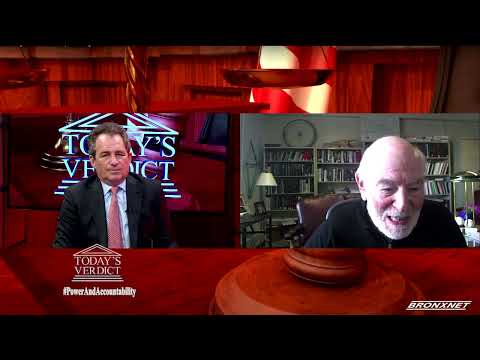
On Today's Verdict, Pace Law professor Bennett Gershman told host David Leash that Article I vests the power to declare war in Congress, that recent U.S. actions in Iran raise constitutional concerns, and that political checks—not immediate judicial relief—are the most likely constraint.
Professor Bennett Gershman told Today's Verdict that the Constitution assigns the power to declare war to Congress and that presidents lack authority to "declare war." "The framers of our constitution wanted the people of the United States through their elected representatives in Congress to decide whether or not to go to war," Gershman said during an interview with host David Leash.
Gershman drew a distinction between a formal declaration of war and unilateral military action. He said past conflicts such as Vietnam led Congress to adopt the 1973 War Powers Resolution to require the executive to notify and obtain approval from Congress within a short period after initiating hostilities. "The statute says something like 48 hours," he said, and added that recent actions involving Iran did not include seeking that congressional authorization.
On remedies, Gershman said the courts are often reluctant to intervene in what they view as political questions. "There is no remedy here in terms of the Supreme Court because the Supreme Court would say hands off," he said, noting that the judiciary may defer to the political branches even when actions raise constitutional concerns.
Gershman placed historical examples in context, saying Congress authorized the Iraq and Afghanistan conflicts but that other periods—he cited Vietnam—saw prolonged military engagement without a formal declaration, prompting statutory responses. He argued the federal judiciary has at times acted as a check on executive excesses but acknowledged the Supreme Court's current composition may limit judicial remedies.
Discussing consequences, Gershman asserted unilateral military steps have strained alliances and contributed to economic fallout. "Our reputation around the world has suffered tremendously," he said, adding that U.S. actions have affected global markets and, he claimed, resulted in American and civilian casualties.
Gershman said the most effective checks in the near term are political: public demonstrations and elections. He predicted political pressure could compel a change in policy and said any withdrawal would likely be framed by the president as a victory. "He's going to have to pull out, but I don't think he can pull out easily," he said.
The interview concluded with Leash thanking Gershman; no formal legal action or court decision was announced on the broadcast.