Get Full Government Meeting Transcripts, Videos, & Alerts Forever!
Get email alerts on the Customs Enforcement topic
No spam. Unsubscribe anytime.
Customs officials urge felony penalty for tampering with seals to deter drugs, invasive species and contraband
Summary
Bill 271-38 would add a criminal penalty for intentionally tampering with Guam Customs and Quarantine Agency seals; Customs Acting Chief Franklin J. Guterres testified the change would close an enforcement gap, and senators pressed for clear definitions, outreach to port operators, and assurance the law targets perpetrators rather than uninformed workers.
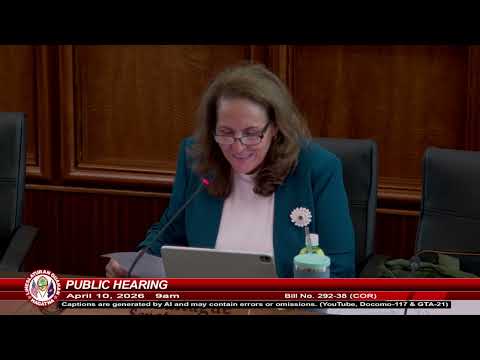
Senator Theres Chilahi introduced Bill 271-38 at the committee hearing, describing a proposal to add section 55.75 to chapter 55, title 9, Guam Code Annotated to deter tampering of Guam Customs and Quarantine Agency (CQA) seals with a felony penalty. Chilahi framed the measure as a response to a drug-crisis environment, invasive-species risks, and other contraband threats that can exploit breaks in the inspection chain.
Colonel Franklin J. Guterres, Acting Chief of Customs and head of Special Enforcement, testified the seal is a law-enforcement control that represents the legal extension of the port of entry and that unauthorized breaking of a seal creates opportunities to remove, alter, or introduce contraband. He described the physical seal as an ISO-certified metal bolt seal with a unique number and tag that warns ‘‘do not break the seal’’; removing a seal typically requires bolt cutters or heavy tools and triggers a time-intensive reinspection that diverts manpower and increases enforcement costs.
Committee members asked CQA about the frequency and nature of incidents. Customs said nine seal-tampering incidents were investigated between 2019 and 2025; in those cases the agency reported it was able to identify the individual who removed the seal, and investigators found no evidence that the events already referred to were criminal in nature. Senators pressed for statutory clarity — for example, whether the bill should enumerate specific tampering acts or capture future sealing technologies — and asked whether the statute would operate in addition to federal offenses (smuggling) or risk being folded into plea negotiations. CQA said clearer definitions in markup would help, that the statute was intended to target intentional interference and that the agency would brief port operators and stakeholders ahead of enactment.
Sponsor Chilahi and members expressed support for the deterrent goal while acknowledging the need to ensure the law targets culpable actors and that industry stakeholders receive notice. The committee marked Bill 271-38 duly heard and invited additional written testimony within three business days.
Next steps: the committee will accept written comments and take the bill to markup, where drafters and CQA expect to refine definitions, enumerations of prohibited acts, and outreach plans.