Get Full Government Meeting Transcripts, Videos, & Alerts Forever!
Get email alerts on the Jury Duty Exemptions topic
No spam. Unsubscribe anytime.
Judiciary warns broad jury-exemption for school specialists would shrink pool; sponsor pledges refinement
Summary
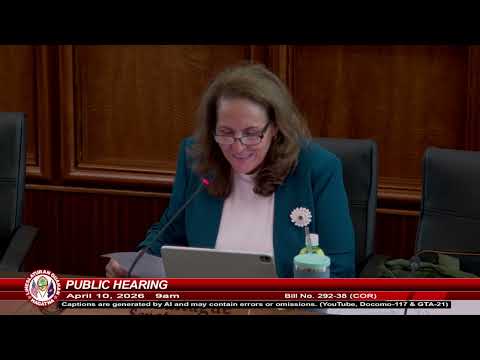
At a public hearing on Bill 249-38 COR, Speaker Frank Blas Jr. proposed exempting certified specialists who provide direct services to students with specialized needs from jury duty; judiciary officials told the committee the draft is too broad and risks reducing Guam's already-limited juror pool, and both sides agreed to refine definitions during markup.
Speaker Frank Blas Jr. opened the committee discussion of Bill 249-38 COR, which would add a new subsection to Guam law to exempt certified specialists who provide direct services to students with specialized needs from jury duty. He framed the bill as an effort to weigh civic duty against the moral and operational need to maintain continuity of care for students who require daily, one-to-one support.
Danielle Rossetti, administrator of the courts for the Judiciary of Guam, testified that the bill as written would create a ‘‘very broad exemption’’ and extend to a wide range of professions — including teachers, counselors, school psychologists, speech-language pathologists, occupational and physical therapists, and special education staff. Rossetti told the committee that removing whole professions from eligibility would shrink the jury pool on an island with a small population, impede the courts’ ability to seat juries, and likely increase administrative costs for qualification reviews. She urged reconsideration and offered the judiciary’s willingness to work with the sponsor to narrow and clarify the bill.
Committee members pressed for data and operational clarity. Senators asked how many exemption requests are received and granted, how the jury-commissioner deferral process operates (for example, shifting service to summer months), and who would certify specialists for an exemption. Rossetti and the jury staff said deferments and hardship excusals already exist, but they cautioned that the statute needs clearer markers so the jury commissioner, clerk, and presiding judges can apply it without creating disputes.
Supporters — and some committee members — cited staffing shortages at the Department of Education, including a reported 2025 shortfall of roughly 159 aides serving about 400 students with disabilities, and argued the exemption could reduce service disruptions for vulnerable students. Speaker Blas said he expects to tighten definitions during markup to balance the judiciary’s concerns with student-care needs.
Next steps: the committee marked Bill 249-38 duly heard and indicated it will hold a markup to refine definitions and consider data from judiciary and education agencies.