Get Full Government Meeting Transcripts, Videos, & Alerts Forever!
Get email alerts on the Athletics Staffing topic
No spam. Unsubscribe anytime.
Moscow bargaining group backs straw plan to add girls varsity head coach and a middle-school assistant
Summary
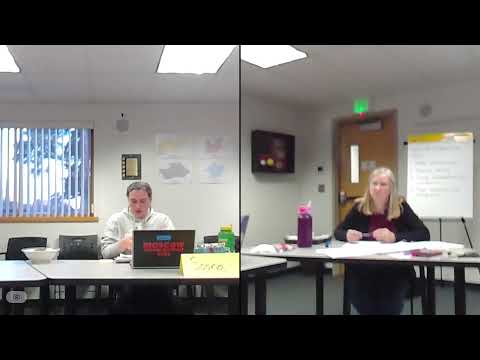
At an April 15 interest-based bargaining meeting, negotiators agreed in a dot vote to pursue a draft that adds a high-school girls varsity head coach and a middle-school assistant to reflect rapid growth in girls wrestling; Sean and Sunna will draft the straw language for the April 29 meeting.
Moscow School District negotiators and association representatives spent most of their April 15 bargaining session on staffing changes to a rapidly growing girls wrestling program and agreed on a preferred straw design to present at the next meeting.
The group settled on a combined option—adding a high-school girls varsity head coach and a middle-school assistant while keeping three high-school assistant slots flexible—after members placed dots to indicate preferences. Volunteers Sean and Sunna were assigned to write the straw design for consideration at the April 29 meeting.
Why it matters: Participants said girls wrestling has expanded quickly and that current language in the negotiated agreement does not consistently reflect program needs. The district described IHSA classification changes and forecast that growth in girls wrestling will require more staffing to provide safe coverage at tournaments and equitable opportunities for female athletes.
District administrators and bargaining members debated how to pay for any new positions. The superintendent noted existing pay formulas for coaches: "We currently pay a varsity wrestling coach right now 16% and assistant coaches at 8%," and proposed several tradeoffs, including reducing a varsity percentage slightly (to 15% or 14%) or moving an assistant slot to the girls program to fund a new girls varsity head coach. Members discussed that the negotiated "percentage" formula is applied to a base (identified in the meeting as about $38,667) and that 16% corresponds to roughly $6,900 at midsteps, while lower-step amounts could be nearer to $6,100.
Participants also reviewed logistics that drive staffing needs: high-school meets often require a coach on each mat and can involve overnight travel and simultaneous events, which makes a single coach impractical when both boys and girls are competing at separate venues. One participant summarized the practical constraint: coaches must be on the mat for safety and scoring, so "assistant coaches and coaches are needed."
Options discussed included: - Add a girls varsity head coach and an assistant at middle school; keep three high-school assistant slots and let the district allocate them by need. - Move an existing high-school assistant slot to serve as a girls assistant coach. - Reduce varsity percentages modestly to offset the net cost of additional positions. - Cut or hold vacant lower-attendance programs to free budgeted positions.
The bargaining team placed the highest preference on the option that adds a girls varsity head coach while maintaining flexible assistant slots; a runner-up option would add the varsity head coach but include one fewer high-school position and omit the middle-school assistant. The group asked Sean and Sunna to produce a written straw design using the top-ranked package for the April 29 meeting.
Next steps: Sean and Sunna will draft the straw-design language and distribute it for review prior to the April 29 session, where the bargaining team will discuss the draft and consider language changes to the negotiated agreement.