Get Full Government Meeting Transcripts, Videos, & Alerts Forever!
Get email alerts on the Rehabilitation Services topic
No spam. Unsubscribe anytime.
John Prentice says state rehabilitation services helped him overcome learning-disability barriers
Summary
John Prentice, a doctoral fellow at Valley Health Systems, credited the West Virginia Division of Rehabilitation Services with funding neurocognitive therapy and accommodations that he says improved his reading level and enabled his career; Valley Health Systems staff also described expanded outreach to homeless and LGBT+ patients.
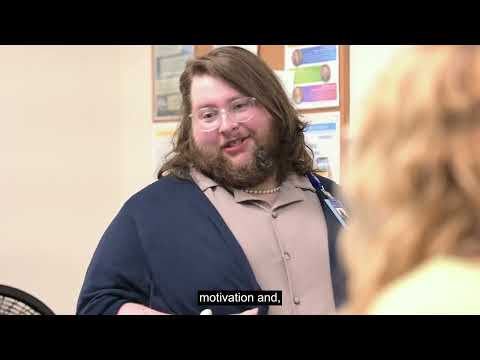
John Prentice, a doctoral fellow in clinical psychology at Valley Health Systems, said the West Virginia Division of Rehabilitation Services paid for neurocognitive therapy that provided both accommodations and treatment for his learning disabilities.
"I can confidently say that without DRS, I wouldn't have been able to do any of what I'm doing now," Prentice said, describing progress he traced from a pre-kindergarten reading level when he started college to about a sixth-grade reading level by the end of his undergraduate studies.
Kelly Whitley, director of behavioral health at Valley Health Systems, said Prentice’s work helped the provider increase services for patients experiencing homelessness and develop additional supportive programming for patients who are LGBT+. "Since Dr. Prentice has joined, we have definitely increased our level of support for our patients experiencing homelessness by providing those services directly to them where they're located," Whitley said.
Donna Kaine, a rehabilitation counselor with the West Virginia Division of Rehabilitation Services, said she initially helped Prentice obtain documentation for ACT testing when he was homeschooled and continued to support his access to higher education and accommodations. "Originally, John was referred to me because he needed accommodations for the ACT for college entrance," Kaine said.
Prentice also credited a long-term DRS caseworker, naming Donna, with regular check-ins since 2012 and ongoing encouragement after he finished school. The transcript also includes a brief personal remark noting service through AmeriCorps VISTA and a desire to continue serving the local community.
The recorded remarks are testimonial in nature; the transcript does not record any formal motions, votes or policy actions.