Get Full Government Meeting Transcripts, Videos, & Alerts Forever!
Get email alerts on the Bearpaw Wind topic
No spam. Unsubscribe anytime.
Apex Clean Energy previews 300 MW 'Bearpaw' wind project for western Stearns County
Summary
Apex Clean Energy told the Stearns County Board it plans a 300 MW Bearpaw Wind project (50–60 turbines across roughly 30,000–40,000 acres), expects operations around 2031–32, and has about 20,000 acres under lease so far; company highlighted lease payments, tax revenues and community grant programs.
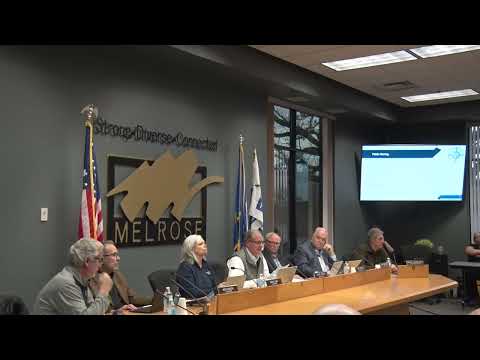
Representatives from Apex Clean Energy on April 7 gave the Stearns County Board an early briefing on the proposed Bearpaw Wind project in western Stearns County.
Drew Christensen, Apex’s senior director of public engagement, and Jake Ston, the project's lead developer, described Bearpaw as a 300-megawatt wind project that would likely use about 50–60 turbines across roughly 30,000–40,000 acres. The company said it has about 20,000 acres under voluntary lease agreements so far (representing roughly 65 landowners) and plans to file an application with the regional grid operator (MISO/MYSO) and the Minnesota Public Utilities Commission as the project advances.
Apex presented projected local economic effects: the company estimated more than $6 million in the first year of operations in lease payments to participating landowners and roughly $1.44 million per year in production taxes (split between county and townships), estimating more than $40 million across a multidecade project life. The presenters emphasized that leases are voluntary, that Apex would cover crop and tile damage during construction, and that decommissioning financial security is part of the permitting process. Apex also highlighted a local grant program that has provided development‑stage donations and said it plans further community outreach, office hours and continued coordination with county highway and planning staff.
Commissioners asked about turbine scale (Apex said newer turbines are taller with larger blades but visually similar), siting across multiple townships, exact lease economics (company described a three-pronged structure: per-acre payments, turbine-host payments and residence payments), transmission interconnection plans (seek capacity on a nearby CapX line), and environmental/decommissioning practices (company described blade recycling/repurposing and steel recycling and said the typical turbine life is about 30 years). Apex also said it will use aircraft-detection lighting systems to reduce continuous nighttime flashing when safe to do so.
Apex said the project is at an early stage: it expects MISO/MYSO and permitting work to take multiple years, with construction targeted in the early 2030s and commercial operations thereafter. The company offered to return with more detailed briefings as studies and permitting progress.