Get Full Government Meeting Transcripts, Videos, & Alerts Forever!
Get email alerts on the Physical Education topic
No spam. Unsubscribe anytime.
Physical education spending grows under referendum; committee asks how outcomes are measured
Summary
Officials said physical education spending rose this year to a $10.5 million program—now the single largest line item in some reports—and that most spending covers salaries; committee members asked what measures (CSMA assessments in grades 2 and 4 and curriculum maps) show the program's effect on student outcomes.
Marion County Public Schools told the Independent Citizen Referendum Oversight Committee that physical education is a major focus of this year's referendum spending and that most of the $10.5 million program budget pays salaries.
"The majority of that is the line share, so to speak, is salaries," Ms. Charity Corneliuson, coordinator for physical education, said in response to a committee question. She described assessments used in PE: county standards mastery assessments (CSMA) for second and fourth grades and curriculum maps for the subject, noting PE teachers deliver standards-based instruction and end-of-year post-tests in 2nd and 4th grade.
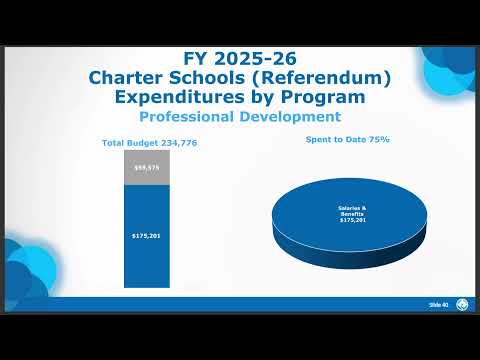
Presenters said the district also budgets a small per-student equipment allocation (about $2 per student) and funds professional learning for PE teachers. Ms. Cherry Cole Newsome highlighted professional development and district representation at statewide training; she also described a local track-and-field skills clinic led by Mark Mater and the 2026 elementary track meet as examples of referendum-funded programming.
Committee members pressed for clearer outcome measures. A member asked whether the district tracks correlations between PE investments and outcomes such as attendance or obesity rates; presenters said they could provide more detailed data and that assessment tools (CSMA post-tests and curriculum-based measures) are used to monitor student performance.
The district reiterated that a state statute requires 150 minutes of physical education per week, which the presenters said drives staffing levels and contributes to higher PE headcount than other specialty areas.