Get Full Government Meeting Transcripts, Videos, & Alerts Forever!
Get email alerts on the Behavioral Health topic
No spam. Unsubscribe anytime.
Wayne State pitches $3M to link 988 and 911 systems, expand county pilots
Summary
Wayne State's Center for Behavioral Health and Justice asked the subcommittee for $3 million to pilot 988–911 interoperability and county‑level training across multiple counties, emphasizing that 80% of funds would flow to county partners for technical assistance and early adopter incentives.
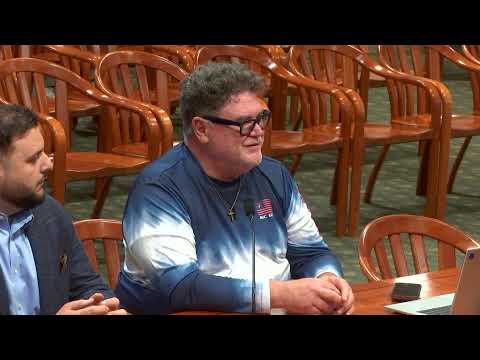
Representatives of Wayne State’s Center for Behavioral Health and Justice described a $3 million legislative request to help counties adopt interoperable systems that link 911 dispatch with the 988 behavioral‑health hotline, plus training and technical aid to counties (the presentation named Wayne, Kent, Kalamazoo, Ingham, Monroe, Cass and Jackson as partners or pilot counties). Dr. Cheryl Kubak and others told the panel that as 988 expanded, many local public‑safety answering points remain unable to transfer or code behavioral‑health calls; the center proposes proof‑of‑concept pilots to enable direct clinician referrals from 911 to 988, acuity triage protocols, and county‑level training so calls can be routed to crisis lines or mobile crisis teams rather than defaulting to law enforcement.
Speakers said the plan would be county‑led, with roughly 80% of the requested funds going to counties for on‑the‑ground adoption and the remainder supporting statewide curricula, interoperability pilots and evaluation. Wayne State representatives described sustainability pathways involving Medicaid, county budgets, 911 councils and federal pass‑throughs in later years.
Why this matters: Presenters argued the pilot could reduce unnecessary law‑enforcement responses and emergency‑room use, speeding behavioral‑health care while preserving 911 capacity. Subcommittee members asked about county readiness and timelines; Wayne State identified an initial proof‑of‑concept period and a 10‑year outlook for broader transformation.