Get Full Government Meeting Transcripts, Videos, & Alerts Forever!
Get email alerts on the Infrastructure Wastewater topic
No spam. Unsubscribe anytime.
Calhoun Township seeks $34.75 million for M96/Columbia Avenue wastewater upgrades
Summary
Representatives of EMTT Charter Township told the House appropriations subcommittee they need $34,750,000 to upgrade failing wastewater infrastructure in four phases along M96 and the Columbia Avenue corridor, arguing the work is required to protect public health and unlock housing and industry growth.
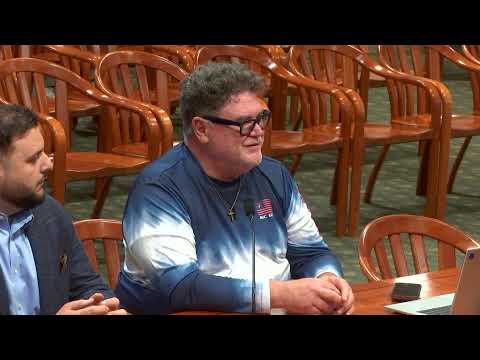
Dave Bzwis, legislative director for Rep. Lightner, and Tracy Meyers, supervisor of EMTT Charter Township, appealed to the Labor and Economic Opportunity subcommittee for $34.75 million in state aid to replace and enlarge wastewater mains and lift stations in parts of the township that serve M‑96 and the Columbia Avenue wastewater corridors in Calhoun County. Bzwis outlined the four‑phase request: Columbia Avenue work at $6.9 million, Michigan Avenue improvements phase A at $10.35 million, phase B at $8.38 million and a phase C figure listed as $16.2 million. Meyers told the panel the town sits between major regional projects and cannot accommodate housing or industrial development without larger mains, wet well upgrades at lift stations 37–38, and new pipe sizes to carry planned flows. She said the township will accept phasing but warned that completing single phases likely alone will not deliver the full economic benefits sought: “I think the whole project needs to be completed before we see the growth,” Meyers said, while acknowledging phased funding can reduce immediate ratepayer impact.
The presenters said township and local consultants have been studying bond and rate options, and that some operational sustainment could be supported by local revenue sources. They asked the committee to consider legislatively directed spending or other state support to avoid placing a disproportionate cost on a small community where the current population is under 12,000. If funded, speakers said they would begin contracting engineering and phasing work with the goal of reducing permit delays and matching state funds to local construction schedules.
Why this matters: EMTT officials argued the aging wastewater system is a near‑term constraint on private and public investment, and that state support would spread the cost among beneficiaries of regional economic activity. The township proposed monitoring and county/regional funding as part of long‑term operations. The subcommittee heard that similar requests for other small communities often reflected the same tradeoffs between local rates and state assistance.