Get Full Government Meeting Transcripts, Videos, & Alerts Forever!
Get email alerts on the Economic Development topic
No spam. Unsubscribe anytime.
Bellagiche CDC outlines $1.5 million lending plan for Gullah neighborhoods, seeks underwriting partners
Summary
The CDC proposed a small-business microloan program ($5,000–$50,000) and a real-estate development loan program ($50,000–$200,000), designating $500,000 and $1,000,000 respectively, and said underwriting will involve the finance department and may include external partners and training supports.
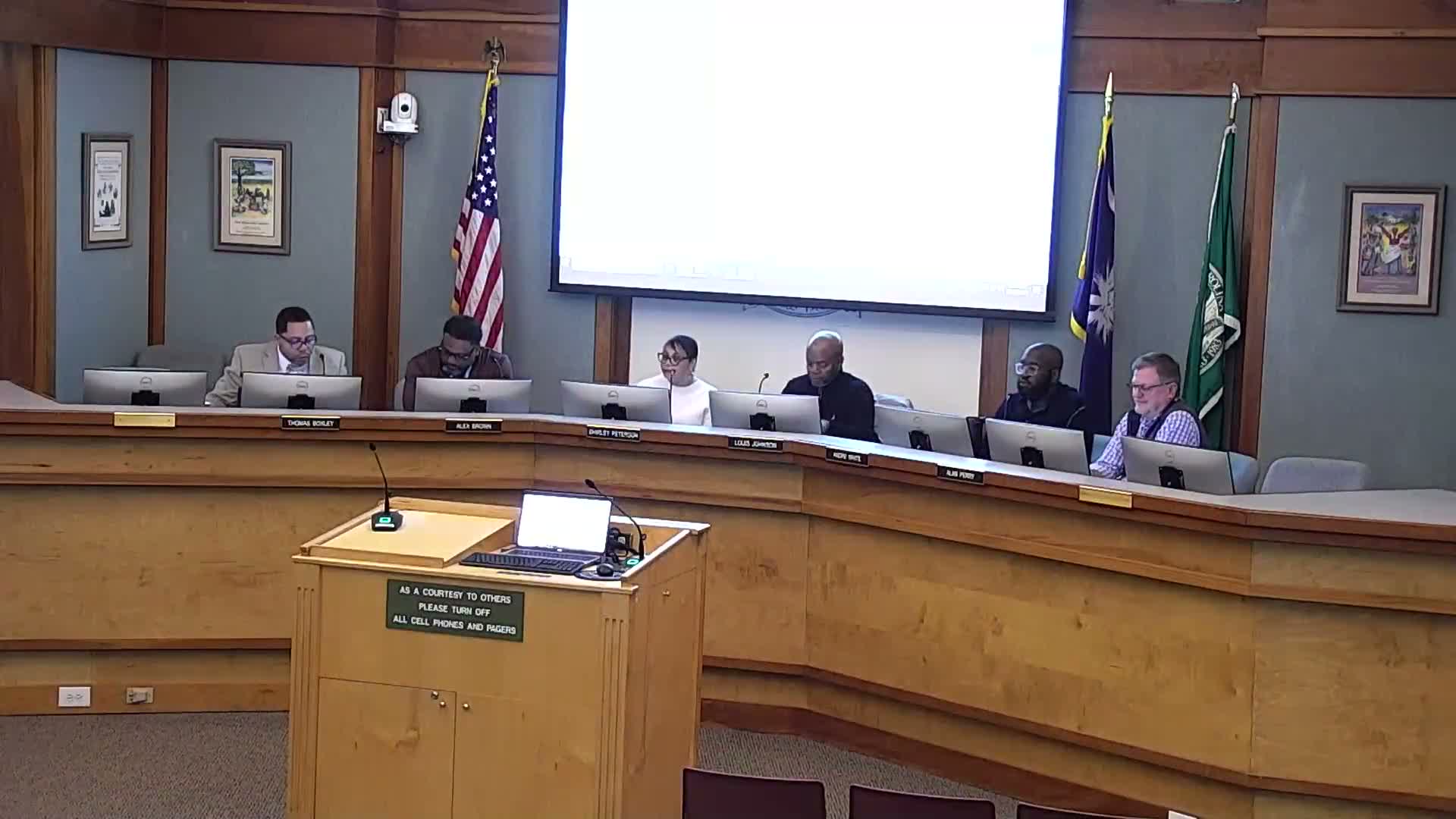
At a public board meeting, Thomas Boxley presented proposed loan programs intended to stabilize and strengthen historically Gullah neighborhoods. The plan calls for a small-business microloan fund offering loans of $5,000 to $50,000 and a real-estate development loan fund for projects of $50,000 to $200,000. Boxley said the CDC has designated $500,000 for the small-business program and $1,000,000 for the real-estate development program; amounts awarded will depend on funding availability.
Boxley said eligibility will require that businesses or development projects be located in identified culturally sensitive communities (Gullah neighborhoods), that applicants provide legal business and land-ownership documentation, and that they present a loan repayment plan. He added the CDC does not want credit history to be an outright disqualifier: "we will not allow credit to be a disqualifier," Boxley said, but the CDC will require applicants who need help to participate in credit-repair and education programs partnered with community organizations and lenders.
Board members pressed for clear underwriting rules and third‑party vetting. One member asked who will underwrite applications; Boxley said he is working with the CDC's finance department to provide support and that he has discussed the program with local lenders (TD Bank was mentioned as a prior partner). He said the internal review committee will include Boxley, Miss Stewart and a finance representative, and that he may add an outside underwriting expert. Boxley described a review cadence: applications accepted on a rolling basis, formal reviews in March, June, September and December, with awards in April, July, October and January.
Boxley offered preliminary program mechanics: the CDC intends to run the funds as loans so repayments can be recycled into future awards; loan durations are under legal review but his goal is terms not to exceed three years in many cases, and specific payment structures (principal-and-interest vs. interest-only) will be determined later. Board members also discussed priorities — Boxley said he would favor projects that increase long‑term rental supply or support first‑time homebuyers — and urged clear underwriting guidance to avoid unintended borrower harm.
Next steps: finalize underwriting guidelines (including consideration of an external underwriting expert), formalize partnerships with lenders and training providers, and return to the board with a detailed budget and product offering for approval.