Get Full Government Meeting Transcripts, Videos, & Alerts Forever!
Get email alerts on the Budget And Finance topic
No spam. Unsubscribe anytime.
Lee County officials defend bond sale and warn senior tax-relief could raise millage
Summary
At the Oct. 20 Lee County Board of Education meeting, finance staff and the superintendent said a recent bond sale does not reflect borrowing from the county, outlined bond repayment and interest figures, and cautioned that a broad senior homestead exemption could force a millage increase or service cuts.
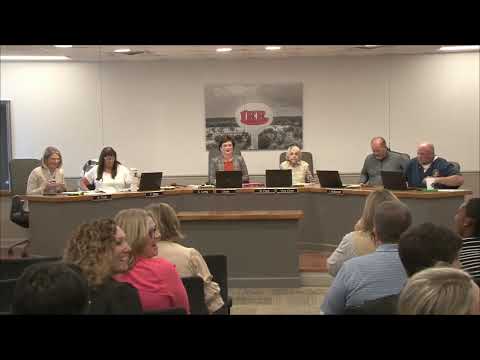
At a Oct. 20 meeting of the Lee County Board of Education, district finance staff and the superintendent defended a recent bond sale and warned that a widely applied senior homestead exemption could push the district’s millage rate higher and force program cuts.
Mr. Gary Kelly, who presented the budget update, said news reports that the school system had borrowed money from the county were “simply not true,” and walked the board through the capital-projects accounting that shows other financing sources — chiefly bond proceeds and fund balance — offsetting capital expenditures. Kelly said the district sold roughly $10.6 million in bonds and expects total interest payments of about $1.3 million, with bond proceeds and a roughly $975,000 premium reducing net interest costs.
Those figures, Kelly said, mean the effective yield on the sale was lower than some reports suggested — around the high 2 percent to low 3 percent range — because the sale included a premium that reduced the net cost of borrowing.
Why this matters: the board is weighing capital needs (including a proposed gym) alongside operations. Officials argued that capital outlay and debt service are treated differently from operations in per‑pupil calculations and that borrowing can allow projects to be completed sooner and avoid higher future construction inflation.
Board discussion focused on trade-offs. District presenters emphasized that one‑time capital costs should not be counted directly in the annual operational cost‑per‑student metric. They also identified growth in salary and benefit costs — not capital projects — as the largest driver of increased per‑student expenditures.
District staff cited the operating budget of about $91 million and said roughly 83 percent of that total is salaries and benefits for the system’s about 858 employees. Officials told the board that average teacher pay has increased in recent years and that employer health‑insurance costs per employee have grown (figures cited in the presentation rose from about $11,341 to roughly $22,620), contributing millions to annual cost increases.
Kelly and other presenters also outlined a scenario for broad senior homestead relief. Using available digest and census approximations, staff showed a hypothetical adjustment that would reduce the tax base and could push an illustrative millage rate from the district’s current 15.96 mills toward a projected 21.28 mills under the specific assumptions used in the presentation — a 5.32‑mill increase. Presenters cautioned that the calculation was a worst‑case, used imperfect data (the tax digest does not record owner age), and that an exemption broad enough to produce that revenue loss could exceed state limits on millage or shift costs to homeowners and businesses who would still pay taxes. The staff presentation said such a reduction in available revenue could force choices such as larger class sizes or furloughs if offsets are not found.
The superintendent said the district would continue to monitor legislation, including House Bill 581, and return with more precise analysis before the board acted on any tax‑relief proposal.
The board approved the district’s August 2025 financial report during the meeting (voice vote, 5–0). Mr. Kelly offered to meet with members of the public after the meeting to answer further bond‑sale questions.
The board recessed for an executive session later in the evening and reconvened without taking public action on the budget at that time.