Get Full Government Meeting Transcripts, Videos, & Alerts Forever!
Get email alerts on the Land Use topic
No spam. Unsubscribe anytime.
Punta Gorda workshop focuses on heights, densities and parking as council directs targeted LDR fixes
Summary
City planning staff reviewed reinstated zoning rules and technical standards at an April 16 workshop, and residents urged protections for the waterfront, tighter setbacks and more parking; council instructed staff to prioritize limited edits first and schedule follow-up public input.
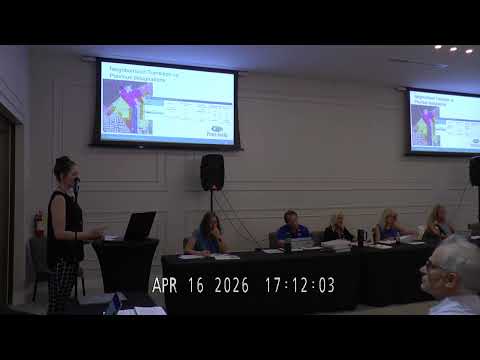
PUNTA GORDA CITY — City planning staff and dozens of residents met at the Beautiful Life Celebration Center on April 16 for a workshop on the city's land development regulations (LDRs), where the discussion centered on building heights, residential density, parking and waterfront protections.
Boyd Lawrence, the city's planning director, outlined the history behind the review, saying the 2024 comprehensive plan and accompanying LDRs were implemented and then repealed by the council last year amid concerns tied to state policy and Hurricane Ian-related permitting restrictions; he said the 2005 regulations were reinstated while staff work to identify policy changes needed to reconcile the comprehensive plan and local regulations. “We believe the 2024 land development regulations would be the most efficient to work with. we could modify those heights and densities that satisfactory to the public and the council,” Lawrence said.
Rachel Barry, the city's zoning official, summarized the technical differences between the codes and highlighted the downtown-focused changes in the 2024 code that provoked the most comment: several districts that had proposed base densities of 25 dwelling units per acre under the newer code reverted to 15 units per acre when the earlier rules were reinstated; the neighborhood center district now carries a 26-foot minimum height, city center remains at a 50-foot maximum (four stories), medical overlay retains a 60-foot maximum and waterfront overlay rules limit residential square footage to 50% of a mixed-use building to qualify. Barry also described limited development-mitigation options (public parking, open space, additional parking) that were narrow in eligibility.
Residents and business representatives who gave public comment overwhelmingly pressed the council to temper density and height in the historic downtown and along the waterfront, citing flood risk, evacuation constraints and preservation of the town's character. “I do not want any highrise or high density over there,” said Kathleen Davis, who identified herself as a Punta Gorda resident. Multiple speakers asked the council to restore environmental protections that they said were weakened in the 2024 language.
Some commenters urged the opposite approach: Derek, who identified himself as a local land-use attorney, told the council that market forces and infrastructure costs, not code text alone, have limited recent redevelopment. “It's not your LDRs,” he said, arguing staff and the council should pick a few core priorities and let staff design code and funding mechanisms (fees or a downtown development district) that would support stormwater and parking infrastructure.
Businesses raised parking and tax-equity concerns. A speaker representing local commerce noted an underutilized downtown parking garage and urged strategies that make existing parking and walkability work for downtown businesses. Another commenter warned that state-level policy changes could shift tax burdens and harm small commercial operators if zoning allows residential encroachment into highway-commercial zones.
City staff responded to questions about water-management rules and enforcement: staff said they had contacted the Southwest Florida Water Management District for clarification and are seeking legal guidance about limits on pressure-washing and other activities; staff asked for continued dialogue and pledged to share further guidance.
Council members and staff agreed on a procedural approach: identify articles or sections that need only minor changes and bring those forward quickly, while dedicating more time to the most controversial chapters (notably the form-based code provisions in Article 3 and substantive changes in Articles 7 and 8 concerning height, density and setbacks). Staff said they will prepare section-by-section materials, continue public input at future council meetings and schedule larger public workshops if needed. The city noted the next regular council meeting is April 22.
The workshop produced no formal votes or code amendments; it served to gather public feedback and to give staff direction on prioritizing edits and outreach. Councilmembers signaled they want to move deliberately but recommended grouping related edits so work does not drag on for years.
What happens next: staff will prepare the prioritized section materials and return to the council for review, followed by additional public meetings. Residents and business owners seeking code clarifications are to be kept informed as legal interpretations and enforcement guidance become available.