Get Full Government Meeting Transcripts, Videos, & Alerts Forever!
Get email alerts on the Rights Of Way topic
No spam. Unsubscribe anytime.
Neighbors, attorneys clash as council hears historical case over Spring Avenue Extension
Summary
Attorneys and residents clashed over whether Spring Avenue Extension was dedicated as a town road in 1939–1941; proponents presented stamped plats and aerial photos; opponents and the Wikipin Fire District pointed to reports and use data that they say show no public acceptance. Litigation and a CRMC hearing are pending.
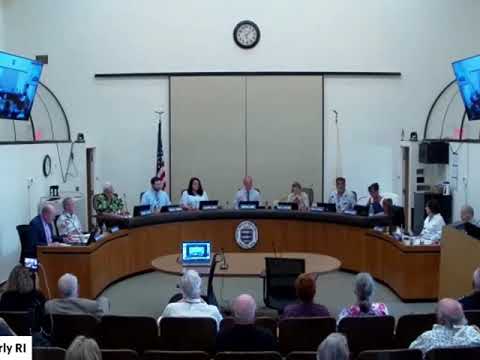
A long-running dispute over whether Spring Avenue Extension is a public right of way drew a packed council chamber on July 21 as attorneys for both sides laid out sharply different readings of historical records and title evidence.
Michael Rubin, representing resident Caroline Contrada, told the council that a 1939 plat and an early-1940s aerial photograph, together with endorsements in the deeds and a 1923 statute, show the road was accepted by town authorities "for public passage" and that the condition that it be "safe for travel" had been satisfied at the time of filing.
"In that moment ... Spring Avenue Extension became for purposes of public passage a town road that was part of the highway system of the town of Westerly," Rubin said, pointing at archival stamps and a photograph he said showed public passage in the early 1940s.
Opposing counsel for the Wikipin Fire District contested that account. Joe Farside said previous town legal opinions (2008 and 2020) and a 1940 report prepared for the town established that Spring Avenue Extension was not a public right of way and that the record does not show the kind of clearing, subgrade work or public acceptance the 1939 statute requires for a dedication to be effective.
"There's no evidence here of clear use of Spring Avenue Extension by the public at any point in time," Farside told the council, and he urged the town not to assume legal victory without clear proof of acceptance and use.
Council members were told the dispute will move through administrative review by the Coastal Resources Management Council (CRMC) — for which a hearing date was rescheduled — and is also the subject of litigation, including a quiet-title action that remains pending in superior court. Town staff and the solicitor said the town filed responsive motions and is waiting for judicial rulings.
Why it matters: the question affects public access to a barrier beach and has broader implications for the town bout maintenance, liability and future municipal decisions on coastal rights-of-way. Residents on both sides warned about legal costs, potential impacts to shoreline access and the need for careful, document-based legal work.
Next steps: the solicitor said the town would present its full record and legal arguments in upcoming hearings and that the council would be briefed on procedural developments and court rulings as they occur.
Sources: Presentation by Michael Rubin and comments by opposing counsel at the Wesley Town Council meeting, July 21, 2025.