Get Full Government Meeting Transcripts, Videos, & Alerts Forever!
Get email alerts on the School Emergency Response topic
No spam. Unsubscribe anytime.
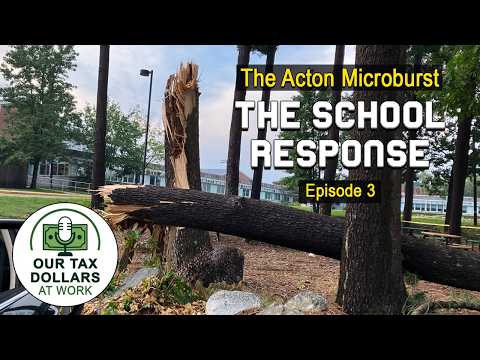
Principal Jim Marott describes holding students after Acton microburst; district delays tests for affected students
Summary
Acton junior high principal Jim Marott told podcast hosts that when a microburst struck just before dismissal the school delayed release, held buses and sheltered returned students; the district later told teachers to postpone tests and quizzes the following Monday.
Acton junior high principal Jim Marott said the school delayed dismissal and held students inside when a sudden microburst struck the town just before the 2:36 p.m. bell, using the PA and two‑way radios to coordinate while central office assumed district‑level decision making.
Marott said he went on the PA to reassure students: “There’s a situation — you’re seeing the weather, you’re hearing the thunder. We’re not going to dismiss yet.” He credited staff for quickly shifting into emergency routines and said the PA system ran on battery backup and the school’s Wi‑Fi remained functional enough to support communications.
The district held students for about 25 minutes before calling buses at roughly 3:00 p.m., canceled after‑school activities and changed bus operations as crews assessed road conditions. Marott said some routes — including parts of Willow Street and sections of Route 2A — were impassable, which led to buses returning to campus with students. “We signed them back in to make sure we knew who we had,” he said, describing how staff set up the library and made Chromebooks available so students could be comfortable while families were contacted.
School leaders identified specific bus routes and sent targeted messages to families — for example, telling parents of children assigned to a returned bus to come to the junior high to pick them up. Marott estimated that roughly 75 students were returned to campus; the final student was picked up at about 6 p.m., he said. Staff and assistant principals stayed late to supervise and provide support.
Peter Light, referenced by Marott as calling from the road during the incident, urged quick action: “Listen, we need to do something here,” Marott recounted. Marott said he also communicated with Joanie Dean at the high school to align timing with the adjacent dismissal schedule.
To help students and staff through the extended hold, school staff procured pizza from a local restaurant and used food and informal comforts to maintain calm. Marott later emailed staff to thank them and summarized the outcome: the buses rolled, students were kept safe, and families were reunited.
District leaders convened a senior leadership debrief that reviewed what worked and what could improve. Marott said the group concluded that holding buses was the right call but noted the value of better, real‑time information on road closures to avoid sending families into “unknown” or hazardous conditions. He said he planned to raise a tabletop exercise scenario at an upcoming school committee meeting to rehearse more difficult cases.
As a student‑centered accommodation, the district informed teachers that the Monday after the storm would have “no tests, no quizzes, no homework due” to account for students who experienced weekend power outages or other storm‑related disruption.
Marott framed the episode as an exercise in judgment and communication: while plans reduce risk, leaders must make rapid choices under uncertainty. He said the most important duty of a principal is protecting students and that the combination of school leadership, public safety and families allowed the school to respond with “calm, compassion, and confidence.”
The episode ends with hosts noting that the incident highlights the importance of rehearsal and interagency coordination; Marott’s next procedural steps include pushing for targeted tabletop exercises and refining communication channels.