Get Full Government Meeting Transcripts, Videos, & Alerts Forever!
Get email alerts on the Transit topic
No spam. Unsubscribe anytime.
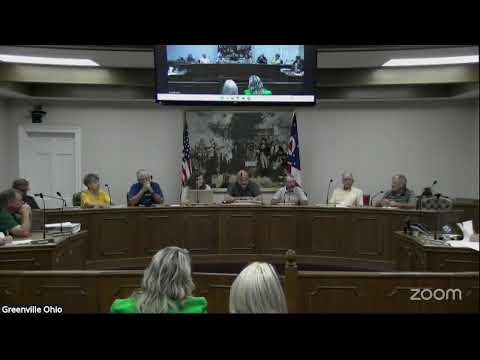
Greenville presents five-year Transit Development Plan; council asks about vehicles, countywide service and funding
Summary
Greenville Transit Director Katie McCabe and an ODOT transit grant coordinator presented a five-year Transit Development Plan highlighting demand-response service, outreach findings (55 survey respondents), phased recommendations (near-term vehicle replacement and software, mid-term service expansion, long-term regional pilots) and funding constraints tied to FTA Section 5311 match requirements; council questioned fleet condition, countywide service risks and service for seniors and people with disabilities.
Greenville Transit Director Katie McCabe presented the city’s five-year Transit Development Plan (TDP) to the City Council, outlining how the agency evaluated service alternatives, community needs and funding options and proposing a phased approach to stabilize and potentially expand transit over the next five years.
McCabe said the TDP grew from advisory committee input, stakeholder interviews (including Job and Family Services, Wayne Healthcare and the Chamber) and a March 2025 survey of 55 respondents. "Transit is not a convenience. It's a necessity for those without other options," McCabe said, summarizing outreach themes that prioritized scheduling, on-time performance and expanded hours.
The plan’s highest-ranked, near-term items included transit marketing and rider education, adding peak vehicles to improve reliability and adopting better scheduling software. Mid-term and longer-term ideas—countywide demand-response service and pilot fixed-route or deviated fixed-route services—were scored as more complex and dependent on partnerships and funding.
Funding, McCabe said, depends heavily on federal and state grants. She identified the FTA Section 5311 program as a major source for rural systems serving communities under 50,000 and noted typical match requirements (50% for operations, 20% for capital). "Without local match funding, we cannot draw down available grants even if we're eligible," she said.
An ODOT transit grant coordinator who worked on the plan said staff used anonymized cell-phone data and other models to better understand travel patterns; he praised the level of engagement and the report’s detail.
Council members asked detailed operational questions: McCabe said the fleet currently has 11 vehicles in service, including two recently acquired used buses and one new bus obtained at no cost via state coordination. She confirmed one bus is currently in a disposition process and that federal best-practice disposition thresholds (about 150,000 miles, varying by vehicle type) drive replacement cadence. Council members also pressed the presenters on whether countywide service could stretch existing resources thin and lead to long wait times for riders; presenters said countywide expansion requires additional vehicles, clearer county commitment and careful operational planning.
On equity and coverage, the council raised concerns about out-of-city senior and developmentally disabled facilities that lost service after countywide changes. Staff said those locations fell outside city limits after previous county trips ended and suggested options such as annexation or private contracts, but cautioned that expanding service beyond city boundaries raises open-ended cost and service-area questions.
Near-term next steps McCabe listed included purchasing improved scheduling software (ODOT-approved/funded) to reduce mismatches between buses and pickups and adding two vehicles approved for the 2026 budget. The presentation did not require formal council adoption; McCabe said the TDP is a playbook for council to act on if it chooses.
Next steps: staff will pursue the approved software purchase, plan for delivery of two vehicles to the 2026 fleet, and continue outreach to potential county and private partners as funding options are explored.