Get Full Government Meeting Transcripts, Videos, & Alerts Forever!
Get email alerts on the Transportation topic
No spam. Unsubscribe anytime.
Commission accepts 35% concept for Seward Highway–Tudor Road interchange, cites pedestrian safety
Summary
The Planning and Zoning Commission accepted a context‑sensitive concept report for the Seward Highway–Tudor Road interchange, endorsing a tight‑diamond alternative and protected shared‑use paths. DOT said only minor right‑of‑way acquisitions are expected at this stage; a 35% design report and public hearing will follow.
The Anchorage Planning and Zoning Commission voted April 13 to accept a context‑sensitive concept report from the Alaska Department of Transportation for the Seward Highway–Tudor Road interchange, putting the project on track to a formal 35% design study and future public hearing.
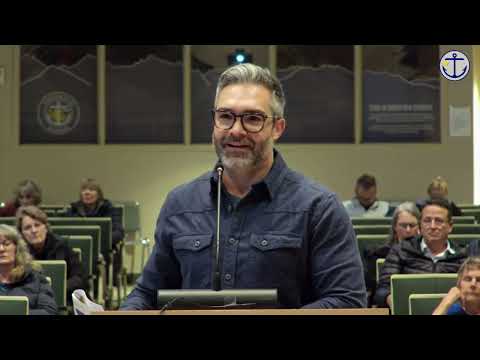
Galen Jones of Alaska DOT, who represented the project team, told the commission the concept report recommends a tight‑diamond interchange as the preferred alternative and that, at the concept stage, the design shows only “minor right‑of‑way acquisitions and no relocations.” Jones said DOT intends to raise the bridge to current overhead‑clearance standards and coordinate with DOT Weights and Measures about freight and over‑height movements.
Commissioners focused on safety for people walking and biking. Staff and DOT explained the bridge design includes a protected shared‑use path separated from vehicle lanes by a concrete barrier and a likely 10‑foot shared‑use path with railing; DOT staff said a 5–10 foot separation is being considered to allow snow storage and additional safety buffers on the 45 mph roadway. Commissioner McKee praised those elements as a “significant benefit to public safety” despite added project cost.
The commission also pressed DOT about mid‑block pedestrian crossings and bus stop locations near McInnes and other corridor hotspots, and DOT said a corridor safety analysis is underway. That analysis will determine which pedestrian improvements are included with the interchange and which might require separate projects and funding.
By accepting the concept report, the commission placed the document in the public record to inform the DOT’s 35% design study. The project team will continue developing detailed designs, complete the safety analysis, and return to public review as required under the municipal process.