Get Full Government Meeting Transcripts, Videos, & Alerts Forever!
Get email alerts on the Homelessness topic
No spam. Unsubscribe anytime.
Alamosa council leans to keep St. Benedict’s campsite open, orders stricter rules and fast‑track review
Summary
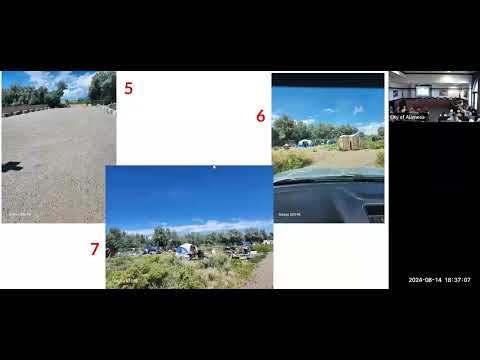
After staff briefings and three hours of public comment, Alamosa City Council indicated a consensus to keep the St. Benedict’s homeless campsite open while directing staff and the Homeless Coalition to draft stricter site rules, accountability measures and a faster implementation timeline.
Alamosa City Council heard staff reports and more than 50 public comments at a work session on the future of St. Benedict’s campsite and signaled a decision to keep the site open for now while ordering a prompt review of rules and enforcement.
City staff described St. Benedict’s as a city‑owned, emergency campsite opened during the COVID pandemic and originally justified in part by the 2018 Martin v. Boise framework. Staff said the site offers a single potable water point, porta‑potties, security cameras, Wi‑Fi, a dedicated parking area and limited electricity before a recent electrocution prompted utility removal. One‑time start‑up costs were listed at about $187,000, including fencing and site work; staff estimated ongoing annual costs at roughly $16,200 in direct payments plus $2,800–$3,000 in in‑kind services (a combined operating total near $20,000 per year). The city noted a $145,000 grant for design and engineering that may need to be returned if the camp is closed.
A trio of public safety reports framed the operational risks: the fire chief reported 22 calls to the site between Feb. 1, 2022 and July 31, 2024 (about 8.8 calls per year, many for cooking or warming fires and some involving compressed‑gas explosions), and the police chief said the department has handled roughly 830 calls for service linked to the site since it opened, including dozens of assaults, several serious incidents and ongoing problems with vandalism and trespass.
Speakers at the meeting split between neighbors and businesses reporting thefts, trespass and safety fears around the camp’s current location near ball fields and the recreation center, and service providers, people with lived experience and volunteers who said St. Benedict’s concentrates outreach and helps people transition indoors. Providers and several residents cited program outcomes: one service provider said 214 people had engaged with services at the site and that 124 had moved indoors, including 36 into rental housing, representing a roughly 57% transition rate for that cohort.
City staff and the police described enforcement options under municipal procedures: officers generally begin with conversation and moving people along, may issue citations that lead to municipal court, and use trespass notices for repeat offenders. Staff also told council that a 2024 U.S. Supreme Court decision changed the prior legal calculus about requiring a shelter option before enforcing no‑camping ordinances; as a result, the city can consider stricter rules at St. Benedict’s if council so directs.
Council discussion following public comment repeatedly returned to a middle path: several councilors said they do not want to close the site without an adequate alternative in place, but they also said the city must add “teeth” — clearer, enforceable conduct requirements, stronger site management, enhanced patrols and a timeline for measuring improvement. One councilor reported an informal count of public comments that night: roughly 34 speakers urged keeping the site, nine urged closure, and a few were neutral or undecided.
Rather than vote immediately, councilors indicated a consensus (a majority of members) to keep St. Benedict’s open while directing staff to notify and work with the Alamosa Homeless Coalition to return quickly with recommended enhanced rules, enforcement options and measurable timelines. Staff said it will begin that work and consult legal counsel about liability and enforceability before the changes return to council for formal action.
What happens next
Staff committed to emailing the Homeless Coalition and to bringing back a package of proposed rule changes and enforcement options for council review. Council members asked for a faster timetable than the coalition’s recent meeting cadence and suggested measurable benchmarks so the council can reassess if conditions do not improve.
The council did not take a formal vote at the work session; instead it gave staff direction to draft changes and report back. Any new rules, trespass processes or enforcement steps would be implemented only after staff and the Homeless Coalition present detailed proposals and council authorizes further action.