Get Full Government Meeting Transcripts, Videos, & Alerts Forever!
Get email alerts on the Wildlife Corridors topic
No spam. Unsubscribe anytime.
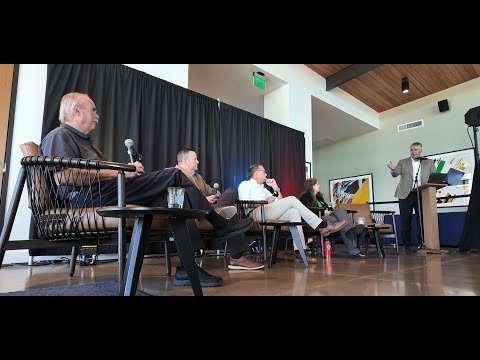
Experts urge regional, science-driven wildlife corridor planning as Prescott Valley prepares a corridor plan
Summary
A panel convened by CYMPO and Prescott Valley called for data-driven, cross-jurisdiction planning to preserve habitat connectivity, highlighting tools such as conservation easements, strategic infill and trail connectivity while noting funding and perception challenges.
Regional planners, conservation organizations and wildlife officials urged coordinated, science-based approaches to preserve wildlife corridors as Prescott Valley grows.
Vinnie Gallegos, Executive Director of the Central Yavapai Metropolitan Planning Organization (CYMPO), opened the session by connecting transportation, trails and landscape connectivity as part of long-term stewardship. "We work to be stewards of our community," he said, and framed the forthcoming work as regional and collaborative.
Why it matters: Jeff Gagnon of the Arizona Game and Fish Department emphasized that development can cause habitat loss and fragmentation, reducing wildlife populations over time. He cited traffic-volume thresholds as an example constraint—roads with average daily traffic above certain levels can block species movement—and said design choices matter for long-term population viability.
Strategies and tools: Panelists recommended a mix of data collection, land-protection tools and regulatory planning. Sandra Hoffman (Logan Simpson Design) and Kim Shanec (Nature Conservancy) recommended building on existing public lands and using conservation easements selectively to protect large habitat blocks without blanket application. "Conservation easements remove the development right from the land," Shanec said, but she added they are permanent and costly and must be applied thoughtfully.
Planning and implementation: John Jacobson, Principal Planner for the Town of Prescott Valley, described the municipal role as project manager—collecting data, scoping priorities, seeking funding, and translating the foundation guide into a 'plan proper' for implementation. Panelists emphasized public engagement, cross-jurisdiction coordination (including county and state agencies), and maintaining funding and political momentum.
Challenges: The group identified three primary obstacles—time (rapid development), money (funding corridors or crossings), and collaboration across landowners and jurisdictions. Perception was also raised as a barrier: residents moving into semi-rural areas may resist denser development even though infill/density can reduce habitat conversion overall.
Next steps: Panelists outlined continued data aggregation, a forthcoming Prescott Valley wildlife plan informed by a foundation guide, and CYMPO’s upcoming regional trails plan as opportunities to link habitat connectivity with recreational and transportation planning. The session closed with a call to continue the regional conversation and to involve residents in shaping implementation.