Get Full Government Meeting Transcripts, Videos, & Alerts Forever!
Get email alerts on the Peer Recovery And Qrt topic
No spam. Unsubscribe anytime.
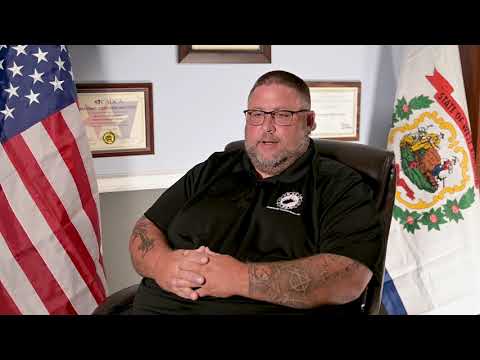
Shane Bell, a QRT coordinator in Princeton, says recovery shaped his work helping people in crisis
Summary
Shane Bell, QRT coordinator at Community Connections in Princeton, West Virginia, described his path from EMS and addiction to a grant-funded role helping people in crisis. Colleagues from the West Virginia Division of Rehabilitation Services and Community Connections highlighted his empathy and the grant support that enabled his hire.
Shane Bell, the Quick Response Team (QRT) coordinator for Community Connections in Princeton, West Virginia, described how injuries and substance use led him from emergency medical services into peer-support work and into a staff role aimed at helping people in crisis. He said he will be eight years clean in October 2025 and that his experience motivates him to help others find stability: “I want to be able to show people that you can still be productive in life.”
Dr. Jamie Stein, deputy director for Community Connections, said the nonprofit is a 501(c)(3) serving behavioral health region 6, which covers 11 counties from Pocahontas County to McDowell County. She said Bell initially entered the organization through the West Virginia Division of Rehabilitation Services to complete the 500 hours required for PRSS certification and that grant funding allowed Community Connections to hire him first as a QRT specialist and then as the QRT coordinator overseeing the team.
Russell Hazlewood, a vocational rehabilitation counselor with the West Virginia Division of Rehabilitation Services, described Bell’s on-the-job strengths, saying he is “very empathetic” and “a great communicator.” Colleagues added that Bell quickly builds rapport with clients and often acts on behalf of people who need help, regardless of barriers such as paperwork or eligibility rules.
Bell gave a brief description of his health and work background: he said he worked in EMS for many years, suffered chronic injuries (the transcript records the condition as “generative disc disease”), and could no longer continue in EMS work. He told the group he sought out Division of Rehabilitation Services after hearing about the agency from a relative and that his goal is to grow the QRT program to serve more people throughout West Virginia and, eventually, into Virginia.
The discussion combined personal testimony and program-level detail: speakers named the grant-supported hiring path, the 500-hour PRSS certification milestone, Bell’s roughly 18 months with Community Connections at the time of the remarks, and his stated recovery timeline. No formal votes or policy actions were recorded during the exchange.
Bell said he hopes to expand the program’s reach and continue using his lived experience to support clients in crisis. Colleagues closed by highlighting the program’s potential to connect eligible people to Division of Rehabilitation Services resources and to keep clients engaged in recovery.