Get Full Government Meeting Transcripts, Videos, & Alerts Forever!
Get email alerts on the School Security topic
No spam. Unsubscribe anytime.
District outlines security upgrades and locked‑door practice; board raises safety and practical concerns
Summary
Preston County Schools' safety director described a deputy‑rotation 'shield' program, camera upgrades and a new locked‑door procedure during instruction; board members praised the intent but raised concerns about keys, HVAC and supervision in older buildings.
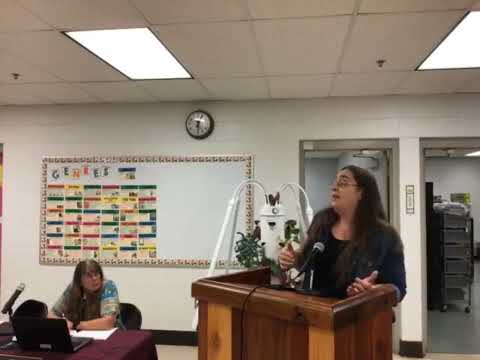
At the Sept. 22 Preston County Board of Education meeting, Nick Schmidt, the district's director of safety, presented multiple security initiatives and fielded board questions about implementation and practical limits in older school buildings.
Schmidt said the district plans a "shield" program in which deputies will rotate through schools, spending about two hours in each building to mentor staff and students and learn school layouts. "They're going to be there for two hours ... talking to the kids, learning the layout of the school," he said.
He also described camera upgrades and an equipment repair that reduced a projected $10,000 expense to roughly $1,300 for special‑education camera fixes, a savings Schmidt said will allow the district to make system improvements within budget.
Schmidt urged a new practice to keep classroom doors locked during instruction as a deterrent to an intruder. "All the training I've been through ... the number one deterrent in an active shooter or somebody trying to get in is a locked door," he said, adding that doors will be open for passing and that the state is moving toward stronger expectations. Schmidt also clarified that the measure "is not a law" at present but that he anticipated future mandates.
Board members acknowledged the security benefit but pressed on practical concerns at Brewon School and other older buildings: inconsistent working keys, HVAC strain when doors are closed, and how teachers should manage students who need to leave the room. One board member said locking doors could create liability if a teacher must keep a foot in a closing door to supervise students. Administrators acknowledged those constraints and said key and maintenance work remains a priority.
Why it matters: The district is balancing deterrence and everyday operational realities. Locked‑door practices can reduce the risk of unauthorized entry, but older buildings with missing or mismatched keys, variable HVAC and limited staffing present practical obstacles to blanket implementation.
What happens next: Schmidt said the shield program scheduling should begin in the coming weeks, camera procurement and repairs are proceeding, and the district will work with principals and maintenance staff to address key/access issues and training before more rigorous enforcement of locked‑door procedures.
For readers: Security changes often involve tradeoffs between access and safety; the meeting captured both technical fixes and on‑the‑ground concerns from principals and board members.