Get Full Government Meeting Transcripts, Videos, & Alerts Forever!
Get email alerts on the Subdivision Variance topic
No spam. Unsubscribe anytime.
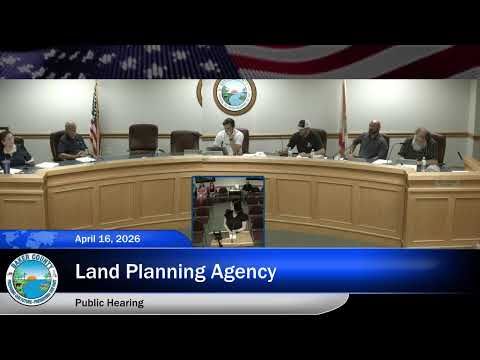
Agency approves subdivision and grants variance to allow three lots off private Seminole Lane
Summary
After extended debate about emergency access and private‑road precedent, the agency recommended approval of a subdivision (three 7.5‑acre lots) contingent on a companion variance to permit the lots to be served by privately maintained Seminole Lane; the variance was approved with conditions including an ask to formalize a road‑maintenance agreement.
The Baker County Local Planning Agency recommended approval of a subdivision that would create three 7.5‑acre lots from an unrecorded subdivision at the corner of Carl Brown Road and Seminole Lane and approved a companion variance relieving certain road-design standards so the lots could be served by Seminole Lane, a privately maintained road.
Staff explained the property is about 71.92 acres made of two previously approved but unplatted subdivision lots; the proposal would record three platted lots totaling 22.5 acres. The fire chief and public works staff flagged concerns that Seminole Lane does not meet county paved‑road or maintenance standards and that emergency‑vehicle access and road design standards are not met without improvements. Staff said a standalone subdivision application would be recommended for denial, but when paired with a variance request for design‑standard relief the applications constitute a complete package for consideration.
Applicant Reed Tillis, who identified himself and provided his address for the record, told the board Seminole Ridge residents have a homeowners association and an informal maintenance arrangement and said, "We can maintain Seminole Lane. We do it. We've been putting rocks down there." He asked the board to consider the local context and argued the neighborhood already performs road maintenance.
Board members debated precedent, enforcement of private‑road agreements and public‑safety risks. Several members pushed for a formal written road‑maintenance agreement that would include the new lots; staff confirmed the variance could be conditioned on a recorded maintenance agreement. After discussion the board moved to recommend approval of the subdivision contingent on the companion variance; the motion carried. The board then voted to recommend approval of the variance itself, with an instruction to formalize the maintenance arrangement and explicitly document the variance scope in the approval.
Staff emphasized that approval of the variance does not make the county responsible for maintaining a private road: enforcement of a maintenance agreement would be a civil matter between property owners. The board urged the applicant to show county officials the road during a site visit and recommended that a formal maintenance agreement be recorded to survive property transfers.