Get Full Government Meeting Transcripts, Videos, & Alerts Forever!
Get email alerts on the AmeriCorps VISTA topic
No spam. Unsubscribe anytime.
United Way tells Spartanburg council AmeriCorps VISTA program is a pipeline for local nonprofit jobs
Summary
United Way presenters described the AmeriCorps VISTA and Direct Service programs to City Council, saying 20 members are serving locally, recent cohorts reached more than 34,000 people, the cohort totaled about $2 million in economic impact this year and VISTA alumni have contributed roughly $26 million in community impact since 2006.
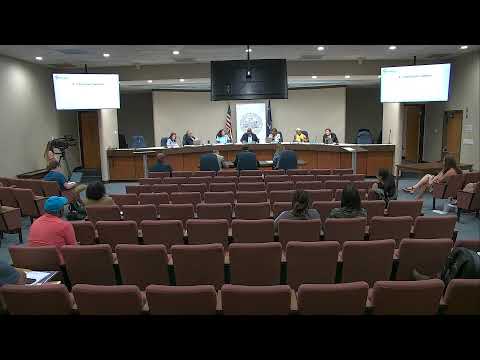
United Way of the Piedmont briefed Spartanburg City Council on Aug. 26 about its AmeriCorps VISTA and Direct Service programs, highlighting the program's role in building nonprofit capacity and helping recent graduates enter local careers.
Hannah Jarrett, vice president of community and collective impact at United Way of the Piedmont, described AmeriCorps VISTA as the domestic analogue to the Peace Corps and said the United Way has run a VISTA program in the Spartanburg community since 2006. Jarrett and other presenters said the program's mission is to strengthen capacity in local organizations to alleviate poverty through partnerships with government, education and nonprofits.
Jessica McMaster, a VISTA leader with the local United Way, said about 80% of alumni report a positive career impact after a year of service and roughly 42% of alumni continue to live and work in Spartanburg County. Presenters said the current/local model places VISTA Direct Service members at the four highest‑poverty elementary schools in Spartanburg County and that the most recent cohort of about 20 members served more than 34,000 individuals and produced an economic impact — including volunteer hours and leveraged donations — of about $2 million.
Becca Waldorf, AmeriCorps program coordinator, explained that VISTA members serve both full‑time (VISTA) and part‑time (Direct Service) roles, often filling capacity gaps for host nonprofit sites that cannot fund full‑time staff. The program team told council sites apply to United Way of the Piedmont and a community impact committee reviews applications using a rubric that weighs mission alignment and member experience; selected host sites may remain eligible for up to three years before reapplying.
During questions, council members asked how many members remain in the community after service and how sites are chosen. Presenters said roughly half of members continue to live and work locally and that some members get hired by their host sites. The presenters invited council and community members to connect with Becca Waldorf for recruitment and site-hosting information and said they plan an end-of-year celebration in August to showcase members' work.
The presentation framed AmeriCorps VISTA as both a workforce pipeline into the nonprofit sector and a local capacity-building tool for organizations serving low‑income residents.