Get Full Government Meeting Transcripts, Videos, & Alerts Forever!
Get email alerts on the Special Education Funding topic
No spam. Unsubscribe anytime.
Committee told state and federal funding uncertainty could cut special‑education support; district pledges to keep caseloads low
Summary
Administrators told the Finance Committee that proposed state and federal changes could reduce special‑education and federal Title funding; the district said it intends to maintain lower caseloads and class sizes, absorbing some costs locally and prioritizing staff where necessary.
Administrators told the Springfield Township SD Finance Committee on April 16 that proposed state and federal changes could reduce revenue available for special education services, and they described how the district plans to respond while protecting lower caseloads and class sizes.
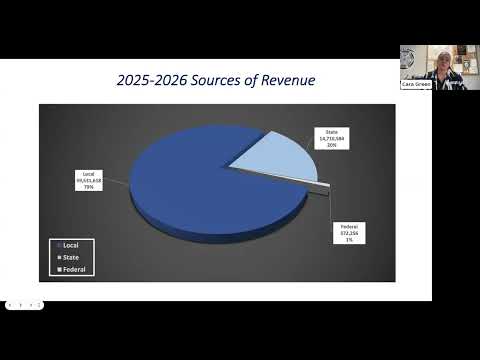
Dr. Yanakon said the governor’s proposal includes increases in basic and special education dollars at the state level but cautioned the district does not expect full approval and that the state’s distribution formula can reallocate funds to higher‑need districts. Dr. Yanakon and Cara also cited a 5.5% decrease in IDEA funding the district received last year and said the federal picture is uncertain; presenters noted a possible net loss of about $90,000 if certain federal Titles (II–IV) were eliminated.
Cara explained that state funding formulas use prior‑year ADMs and weighted calculations, which can leave districts with rising special‑education needs but a reduced allocation because the formula redistributes funds based on relative need. She and Dr. Yanakon said Springfield Township SD intentionally maintains caseloads and class sizes below state maximums, which the parent advisory group described as a community priority; keeping those smaller sizes influenced staffing decisions and the budget.
Presenters said the district has absorbed some special‑education costs locally to preserve services and that attritional savings and careful staffing choices have helped limit the fund‑balance draw. They emphasized the district’s preference to preserve class sizes rather than seek larger staff reductions and said administrative hires and retirements were evaluated for replacement on a case‑by‑case basis.
The administration did not propose specific additional cuts to special‑education services in this meeting; instead, it described the funding risk and said it will monitor state and federal decisions and return to the committee if adjustments are necessary.