Get Full Government Meeting Transcripts, Videos, & Alerts Forever!
Get email alerts on the Local Budget topic
No spam. Unsubscribe anytime.
Springfield Township SD finance committee will present 3.5% proposed tax increase and $78.1M budget to full board
Summary
The Finance Committee reviewed a proposed final 2026–27 budget that would raise taxes by 3.5%, use about $715,666 of fund balance, and fund $78.1 million in expenditures; committee members agreed to present the proposal to the full board on April 21 for the required 30‑day public review before a June 16 final vote.
The Springfield Township SD Finance Committee on April 16 reviewed a proposed final 2026–27 budget that would increase property taxes by 3.5%, anticipate $78.1 million in expenditures and draw roughly $715,666 from the district’s fund balance to bridge a projected revenue shortfall.
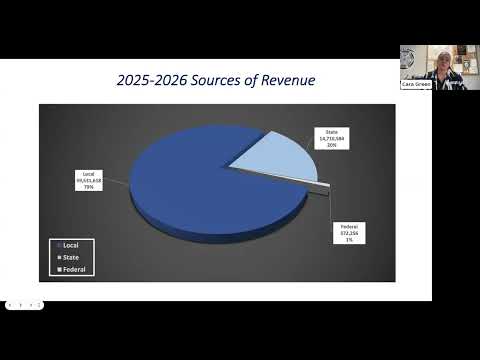
Cara, a staff member leading the finance presentation, told the committee that year‑to‑date revenue collections are pacing ahead of expenditures and that the district had collected about $65.3 million to date, but that property‑tax receipts occur July–December and some revenues "trickle in" later in the fiscal year. Cara said the proposed final budget shows anticipated revenues of about $77.4 million and anticipated expenditures of about $78.1 million, leaving a planned fund‑balance use of about $715,666.
Dr. Yanakon, a district administrator who co‑presented the budget, said the administration built the plan around six guiding principles—academic programming, facilities, technology and cybersecurity, mental‑health and social‑emotional supports, staffing and professional learning—and cautioned that national and global economic volatility (including higher energy prices) complicates forecasting.
Committee members heard how the district reduced its projected reliance on fund balance since the "first‑look" estimate by nearly a half‑million dollars. Cara said roughly $260,000 in attritional staffing savings and about $236,000 in net debt‑service savings from favorable refinancing of 2018 bonds improved the bottom line.
On homeowner impacts, Cara presented examples showing the 3.5% proposal would lower fund‑balance reliance by about $716,000 and increase the median homeowner’s annual tax by roughly $218 (about $18.18 monthly) before homestead/farmstead reductions and district rebate programs, which have not yet been certified and were excluded from the calculation.
Cara said the Finance Committee will present the proposed final budget and the 3.5% tax‑increase recommendation to the full board at its April 21 meeting; a minimum 30‑day public posting and review period follows state requirements before the board may adopt a final budget, currently scheduled for approval on June 16. No formal vote on the proposed final occurred in the Finance Committee meeting.
The administration highlighted program and capital priorities funded in the proposal, including additional coaching positions for middle‑school volleyball, converting longstanding volunteer advisor roles to paid extra‑duty positions, continuing the cybersecurity plan, selective technology and TV‑studio equipment replacements, a planned K–8 math curriculum purchase for 2027–28 implementation, and continued capital work on the middle‑school renovation supported by the Series 2025 bond issuance.
Committee members expressed support for the recommended 3.5% use of the Act 1 Index, citing economic uncertainty and a desire to keep the district’s planned fund‑balance reliance lower while maintaining class sizes and service levels. The board presentation on April 21 will be followed by public comment and a formal motion at that meeting to place the proposed final budget before the board for approval.