Get Full Government Meeting Transcripts, Videos, & Alerts Forever!
Get email alerts on the School Safety And Wellbeing topic
No spam. Unsubscribe anytime.
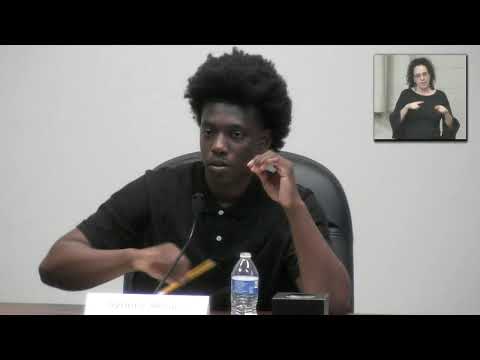
Students press SMOB finalists on safety, mental health and chronic absenteeism as they describe on‑campus strains
Summary
During an April 17 town hall, students asked finalists about school safety, mental health access, and chronic absenteeism; candidates urged better outreach, resource marketing, relationship building with security staff, and targeted programs to reduce absences.
Students used the town hall to press both finalists on safety, mental health and chronic absenteeism — issues candidates said are central to whether students attend and learn.
On chronic absenteeism, Brian Tobias Polanco said improving school climates and administrator‑student relationships is central: "If we have a strong environment where our students feel valued, heard... I am sure that it will improve those numbers." Sydney Mosley described morning conditions that deter attendance — early wake times, overcrowded buses, standing in cold weather and delays at doors — and said those structural factors must inform solutions: "It's starting from the morning. People already don't want to go to school."
Candidates also debated how to maintain safety without making schools feel like prisons. Polanco recommended assessing community needs, training and partnering with existing security staff and school resource officers, and avoiding layering on measures that create a punitive atmosphere. Mosley urged relationship‑building between students and security personnel, scannable ID systems to track building access, and policies that protect immigrant families; she cited recent board measures she described as protective — the Community Safe Spaces Act and "policy 0130" — and said the board should enforce protections rather than just put them on paper.
Mental health came up repeatedly. Mosley thanked a sponsor she named — "Mr. Alonzo T. Washington" — for a mental‑health bill that allows two mental‑health days per semester and argued that student outreach and ensuring SMOBs themselves have resources are prerequisites for effective advocacy. Polanco said equal access and stronger marketing of existing resources would be his priority: "Although we have the resources they're not marketed big time. So I would use this position to ensure that they're being marketed...".
Why it matters: Safety, mental health services and chronic absenteeism are interlinked drivers of student success. Candidates tied their proposals to resources and to how the district communicates protections and services to students and families.
What remains unresolved: Both candidates described high‑level fixes; neither presented a funding plan or timeline. Several student questioners asked for concrete implementation steps (peer mediators, counselor staffing, IDs and facility repairs) that would require administrative action or board funding.