Get Full Government Meeting Transcripts, Videos, & Alerts Forever!
Get email alerts on the Wraps Application Review topic
No spam. Unsubscribe anytime.
WRAPS and restaurant tax committee to review 89 applications; $5.4M available for roughly $7M in requests
Summary
The committee set an April 21 review meeting and confirmed reviewers will submit numeric scores (0–5) ahead of an in-person deliberation to allocate about $5.4 million across 89 applications requesting just over $7 million; staff clarified awards carry a 31-month completion window.
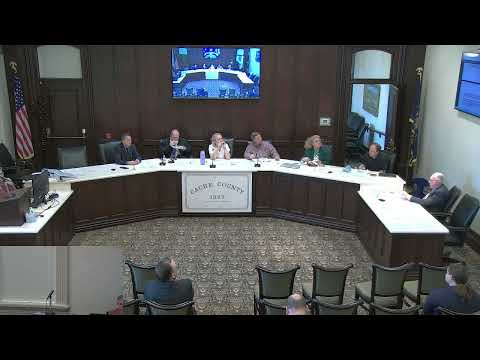
The Wraps and Restaurant Tax Committee reviewed procedures and timing for evaluating this year’s pool of applications, deciding to collect reviewers’ numeric scores before meeting in person to discuss award amounts.
Elma, finance staff responsible for administering the program, told the committee that applications were due the first Friday in March and that this year 89 applications requested just over $7 million while approximately $5,400,000 is available. "We got 89 applications and the total request is just over 7 million," she said, noting a funding shortfall of about $1.7 million.
The program comprises two dedicated levies. Elma summarized the history and eligible uses: the restaurant tax began in 1992 at 1% of sales tax; WRAPS (short for Recreation, Arts, Parks and Zoo) was established in 2002 at one-tenth of 1% and supports capital and operating costs for public recreation, parks and cultural organizations. She described the allocation approach staff uses to divide funds among cultural/botanical, recreation, municipal set‑asides and a competitive pool.
Review process and scoring were central to the meeting. Elma explained the reviewer interface and a 0–5 scoring matrix (staff added a zero option); she will aggregate scores from the seven reviewers and present scores and application details at the in‑person meeting. The committee agreed reviewers should submit scores ahead of the April meeting but not suggested award amounts; members preferred to debate and set dollar awards together during deliberations to preserve discussion dynamics.
Committee members also discussed operational details intended to improve award outcomes. Several urged that applicants demonstrate project readiness—bids or invested funds—so reviewers can better judge likelihood of timely completion. The committee asked staff to flag applicants with a backlog of previously awarded but unfinished projects when preparing the reviewer books.
Elma said awards approved in May 2026 will have until Dec. 31, 2028 to complete projects and file reimbursement requests (31 months). She added staff will send reminders to applicants whose awards are nearing expiry and that unused funds returned from expired or unclaimed awards will be reallocated in future cycles.
The committee set the in‑person review meeting for Tuesday, April 21, from 8:30 a.m. to 12:30 p.m.; Elma said she will distribute printed reviewer books and database access in advance. She also agreed to add clearer flags in the reviewer materials indicating whether applications qualify for restaurant tax, WRAPS tax, or both, and to include five‑year award history for each applicant.
The meeting closed with staff and members discussing small process changes (how to order reviews to reduce start‑bias and whether to begin review with highest‑scoring items) and with thanks to staff for improving the online submission and tracking system.
Next procedural step: reviewers submit scores to staff ahead of the April 21 meeting; the committee will deliberate award amounts at that session and forward recommendations to the county council.