Get Full Government Meeting Transcripts, Videos, & Alerts Forever!
Get email alerts on the Public Health Report topic
No spam. Unsubscribe anytime.
Clinton County Health Department presents 2025 annual report; distributes $173,195 in community grants
Summary
Health Department Director Melissa Osler presented the 2025 annual report April 14, 2026, detailing fund structures, expense containment (reported expenditures $971,114.14), distribution of $173,195 in community benefit grants and completion of four Health First Indiana core service measures; department cited continued regional grant work on Grow Indiana Rural Health Transformation.
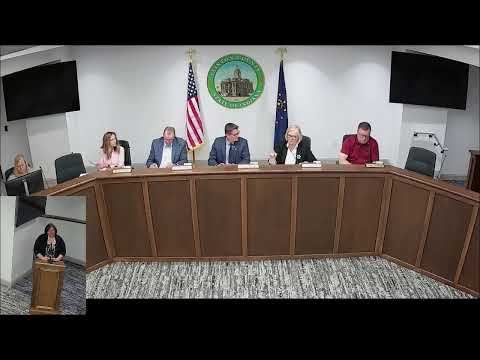
Melissa Osler, presenting the Clinton County Health Department's 2025 annual report at the April 14 council meeting, outlined the department's finances, community programs and regional partnerships.
Osler said the department structured a broader snapshot of its 2025 budgets and reported that the county fund and grant funds underpin a range of services. She told the council that total expenditures for the reporting period were $971,114.14 and that the department spent about 67% of its projected budgeted expenditures for the year.
On grant-funded programs, Osler identified fund 1161 (Health First Indiana) and referenced a prior budget level of $727,000 before reductions; the department adapted to those cuts through internal adjustments. Osler also said the department distributed $173,195 in community benefit grants last year to local partners that deliver health programs.
Osler read a message from the health officer, Dr. Melissa Pearson, who thanked staff and partners and said, "2025 has been a year of transition and redirection at the Clinton County Health Department," noting continued efforts to stabilize operations and maintain services.
The report notes that four statewide core service measures tied to Health First Indiana moved to "full completion" in 2025: structured obesity-prevention programming; a program to improve birth outcomes; extended vaccination hours beyond routine business hours; and offering immunizations regardless of insurance status. Osler emphasized that "full completion" reflects meeting state reporting requirements, not that the work is finished.
Osler and council members discussed the regional Grow Indiana Rural Health Transformation grant and the county's role in a regional coalition (Region 3). Osler said regional collaboration does not guarantee a specific funding award to Clinton County but could bring broader transformation opportunities.
Osler also described several upcoming community events, including a mobile lung CT clinic and a Heroes of Hope event scheduled for May 2 at the Clinton County fairgrounds from 10 a.m. to noon, which will offer screenings, immunizations, lead and A1C testing, partnerships with IU Health and other local organizations, and no-cost services for attendees.
Council members praised Osler and the department for preserving services despite funding reductions; several members noted the clarity of the budget breakdowns Osler provided.