Get Full Government Meeting Transcripts, Videos, & Alerts Forever!
Get email alerts on the School Safety topic
No spam. Unsubscribe anytime.
Parents and advocates clash over returning school police during LA Unified committee meeting
Summary
A community petition and public presenters pressed the board for more LCAP safety metrics and the option to assign officers to secondary campuses; other speakers and civil‑rights groups opposed returning police, urging investment in counselors, PSWs, restorative and community-based supports.
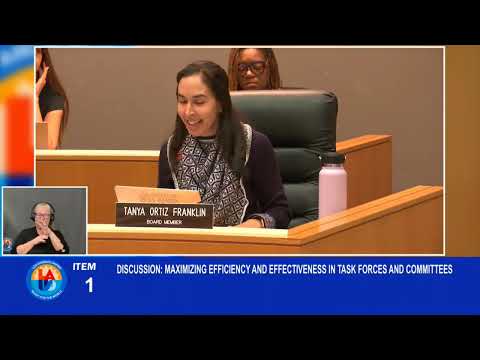
A public petition and a series of speakers at the Nov. 4 Committee of the Whole provoked a broad debate over campus safety and the role of school police. Maria Luisa Palma, who presented a petition she said contained about 5,600 signatures, asked the board to add an agenda item seeking additional LCAP transparency and the authority for secondary school sites to request assigned officers.
"We are requesting a comprehensive safety accountability plan," Palma told the committee. She urged the board to publish metrics such as on-campus incidents and school-police calls for service, and to place a two-part resolution on a future board meeting agenda: first to produce additional data and, second, to let secondary campuses request assigned officers after the data is public and discussed.
Public commenters split sharply. Several parents and community speakers said they want police assigned to secondary campuses to protect students from gang recruitment, weapons and fentanyl. "We want school police," said Isabel Gonzalez, speaking in Spanish. Multiple parents described local safety concerns and asked the board to return officers to some campuses.
Other speakers, including student and civil‑rights advocates, opposed reintroducing officers. They pointed to research and past incidents and urged the district to expand non‑police supports—school climate staff, psychiatric social workers, restorative justice programs, safe passage and culturally‑affirming counseling—rather than reassigning officers. Irene Rivera of the ACLU Southern California said police presence criminalizes typical adolescent behavior and disproportionately harms Black, Latino, immigrant and disabled students.
Board members listened and asked staff for more data. Several asked that LCAP metrics and progress measures be made clearer and more accessible to parents; Palma and others said metrics as presented to parent advisory committees lack historical context and subgroup breakdowns that would show whether supports targeted to high‑need students (SENI) are improving safety and climate measures.
The committee did not vote on a policy change. Board members and staff agreed to consider Palma's request for added transparency and to follow up with more detailed data on LCAP measures, subgroup results and how specific programs—such as campus aids and school climate supports—are funded and measured.
For now, the debate remains unresolved: parents and advocates on both sides urged the board to weigh local safety needs, legal considerations and equity impacts as it decides whether to formalize any change to school-police assignment.