Get Full Government Meeting Transcripts, Videos, & Alerts Forever!
Get email alerts on the Setback Variance topic
No spam. Unsubscribe anytime.
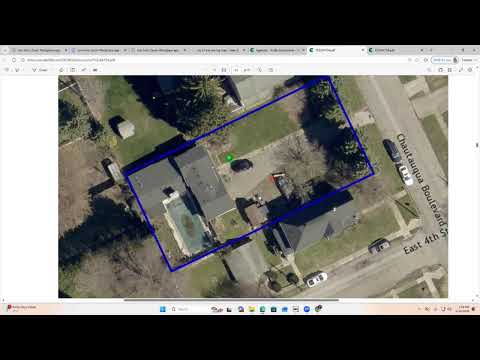
Board rejects 69-foot front-yard setback request at 319 East Second Street
Summary
The Erie Zoning Board denied a request to set a new house back 69 feet on a narrow lot at 319 East Second Street, concluding the applicant had not shown the unique hardship required for a variance; the board offered a 46-foot compromise that the applicant declined.
The Erie Zoning Board voted unanimously to deny a request to permit a 69-foot front-yard setback for a proposed one-family dwelling at 319 East Second Street.
Taylor Hoover, representing property owner Timothy Hoover, described the proposed structure as a garage-first design with an elevator to a single upper unit, arguing the narrow 41-foot lot and recent building-code changes reducing side allowances made a deeper front setback necessary to provide off-street parking and snow storage. “The ability to get the cars off the street, be a place for the snow to go, and that’s kind of what we want to do,” Hoover said.
Board members and the solicitor pressed the applicant to identify a legally cognizable hardship; staff member Ms. Francis clarified that the parking code generally requires one off-street space per single-family dwelling and two for a two-unit rental (parking code §303). The board offered a compromise setback of 46 feet based on an adjacent property’s 46-foot setback, but the applicant declined that alternative and requested the full 69 feet.
After executive-session deliberation the board recorded a unanimous vote to deny the requested 69-foot setback (Mr. Seebold/Seabolt: no; Mr. Johnson: no; Ms. King: no; Ms. Guncheon: no). The transcript records the board noting that while neighborhood setbacks vary, the variance criteria require evidence that the property cannot be developed in compliance with the ordinance.
The applicant criticized the outcome as a missed redevelopment opportunity and urged discussion with city council about zoning rules; the board reiterated that its decisions must follow ordinance criteria rather than policy preferences.