Get Full Government Meeting Transcripts, Videos, & Alerts Forever!
Get email alerts on the Municipal Budgeting topic
No spam. Unsubscribe anytime.
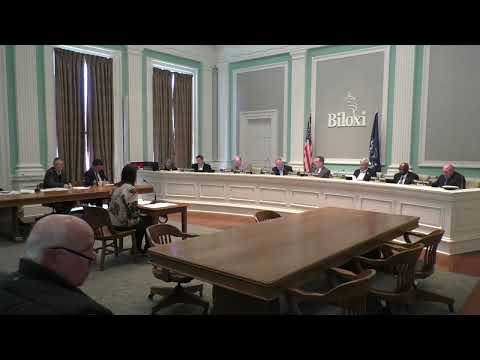
Biloxi council approves project accounts for $2.2 million in internet-use tax after 4–3 vote
Summary
After a prolonged debate over control and guardrails, the Biloxi City Council voted 4–3 to open project accounts for $2.2 million in internet-use tax revenue so ward-level projects can be funded; several members demanded a follow-up workshop to set rules and pooling options.
Biloxi — The City Council voted 4–3 to create project accounts to receive $2.2 million in internet-use tax funds from the Mississippi Department of Revenue, a move proponents said would speed repairs and small infrastructure projects while opponents called for clearer rules and a workshop before any money was spent.
Councilman Rick Weaver told the council the money is already budgeted and could be used for a range of near-term fixes: "This would put us in the budget so that we could utilize this $2.2 million to be doing some of these projects," he said, listing drainage repairs, sidewalk fixes and spot road repairs. Public works director Christie Labatide pointed to specific possible uses including Briser Place drainage, Howard Avenue drainage and French drains on Cove Drive.
But several council members pushed back, urging a formal workshop to set guardrails on eligibility and to avoid inequities. "I would prefer to see the accounts opened after we have a workshop," Councilman Shoemaker said, noting concerns about existing obligations and whether the funds are earmarked for other scheduled payments. "We need questions answered on what we can and cannot use it for."
Supporters argued the accounts will allow faster action on neighborhood problems. "This gives more of the council a little more room to get things done that our constituents want done," Councilman Gray said. He added that the funds could be used immediately for point repairs and other smaller projects while longer-term paving and bond-funded work proceed.
The council debated several procedural options — amending the previous resolution, remanding it for substitution or tabling to hold a workshop — before the full-body vote. A motion to table the resolution and schedule a workshop failed on a close voice count, and the council instead approved the original resolution 4–3.
Council members on both sides asked the administration to schedule a workshop immediately to define timelines, allowable project types, whether funds may be pooled for larger projects and rules for emergency spending. Several members also proposed creating a contingency or master account to reduce tug-of-war between wards.
What happens next: The administration will establish separate project accounts for the seven wards as directed. Council members requested the mayor and administration convene a workshop (proposed for Feb. 3 in the meeting discussion) to write the policy and determine reporting, pooling rules and any required amendments to the resolution.
Votes at a glance: The resolution creating project accounts was approved 4–3; supporters said it would allow immediate use for small capital and maintenance projects; opponents sought a workshop and clearer guardrails before money was committed.