Get Full Government Meeting Transcripts, Videos, & Alerts Forever!
Get email alerts on the Housing Legislation topic
No spam. Unsubscribe anytime.
House leader says Senate housing bill needs fixes over new programs, investor rules
Summary
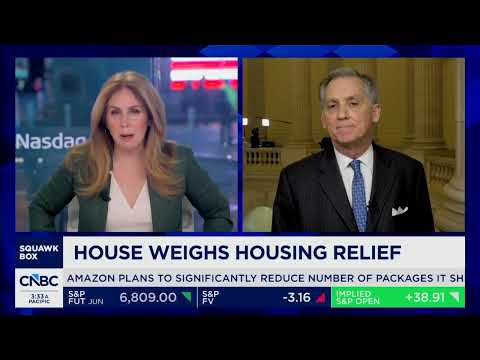
Rep. French Hill, chairman of the House Financial Services Committee, told reporters the Senate housing bill contains new programs and drafting flaws — including a provision he said would force rental homes to be sold within seven years — and that House and Senate negotiators must reconcile the measures.
Rep. French Hill, chairman of the House Financial Services Committee, said the House and Senate must reconcile competing housing bills after each chamber approved different measures with broad bipartisan support.
Hill told interviewers the House bill — which he said passed 390 to 9 in the chamber — focuses on “supply-side” reforms: making the Department of Housing and Urban Development more accountable, expanding Community Development Block Grant eligibility for housing, enabling more bank investment in community development and freeing community banks to increase home-construction lending. “That was the approach we took,” he said.
The Senate passed its own bill with administration backing by an 89–10 margin, Hill said, but he argued the Senate measure creates new programs the House has repeatedly rejected. He singled out language he described as technically flawed: a provision he said would require homes built for rent to be sold within seven years of construction. “To force the private sector to sell those houses in some arbitrary date of 7 years, I think is a real problem for a lot of members of the House,” Hill said.
Hill also said the Senate included a measure that bans central bank digital currencies but then applies a sunset after 2030. “They put a sunset on it, meaning that after 2030 the government could go forward with a central bank digital currency,” he said, adding that the sunset raised concerns for some House members.
Industry groups, Hill said, have raised objections to parts of the Senate draft. “The mortgage bankers and the homebuilders are opposed to the Senate bill,” he said, citing industry resistance to the draft language around institutional investor limits.
Hill described reconciliation pathways with Sen. Tim Scott in the Senate and said conferring to amend the Senate bill is a likely route. He noted several House caucuses — including the Republican Study Committee and the Main Street caucus — support working with the Senate to revise the Senate text so it will pass the House with similarly broad margins.
The congressman framed the dispute as narrow but substantive and said presidential executive orders issued the previous Friday contained elements similar to the House’s 21st Century Housing Act and the Main Street Capital Access Act, which he said demonstrates shared priorities among lawmakers and the administration.
What happens next, Hill said, is technical work between House and Senate negotiators to correct drafting problems and reconcile program differences so both chambers can approve a single bill that advances additional housing supply.
The interview concluded with Hill saying he expects continued negotiations and returning to discuss progress as the measures move through Congress.