Get Full Government Meeting Transcripts, Videos, & Alerts Forever!
Get email alerts on the Education topic
No spam. Unsubscribe anytime.
Orting School District highlights reading, family communication and SEL progress in LCAP presentation
Summary
At a board meeting, Tarmigan Ridge staff showed midyear i-Ready gains, described targeted interventions (UFLI, SIPPS) and new family-communication practices intended to boost proficiency and student agency; board members praised students and teachers.
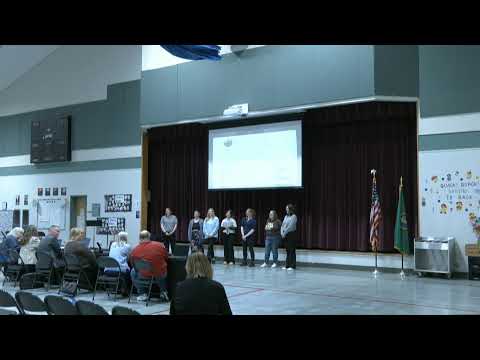
Orting School District officials and teachers presented a progress report on school goals, assessment data and supports at the board's meeting, highlighting midyear i-Ready gains and expanded family communication strategies.
At a meeting that opened with a third-grade musical performance, a Tarmigan Ridge Elementary administrator told the board the school set an academic target of increasing grades 3'5 proficiency by 50% and boosting K' proficiency by 20% by the end of the year. The administrator said the district's midyear i-Ready growth goal has already been met and staff are watching for final state SBA results.
The context: The presentation was framed around work by Professional Learning Teams (PLT) to align curriculum and classroom goals with "core competencies" translated into student-friendly language. "We believe in creating a caring, inclusive, and safe community where every student feels valued, heard, and supported," the administrator said, describing how classroom teams set clear success criteria and use monitoring systems to track Tier 2 and Tier 3 interventions.
What teachers described: Fourth-grade teacher Nicole Sakrosky outlined a proactive parent-communication system that includes positive postcards, concise academic updates and short videos to help families support classroom learning. "When families feel informed, supported, and valued, students are more successful both academically and socially," Sakrosky said.
On reading interventions, staff reported using UFLI (a phonics-based program) for foundational skills, SIPPS for intensive Tier 3 work, and Bookworms to organize instruction and place students in targeted groups. The presentation included specific fall-to-winter i-Ready shifts the presenters said show measurable progress: third-grade Tier 3 students decreased from 25% to 16%; fourth grade dropped from 28% to 17%; and fifth grade from 54% to 41%, which the presenters described as reaching a midpoint toward their year-long goals.
Fifth-grade teacher Megan Talker explained classroom routines tied to i-Ready and goal setting: students complete at least three i-Ready lessons per week, track progress on visible walls, and set short- and long-term goals tied to mastery checks. Staff said these practices, paired with regular data review, allow teams to adjust instruction each week.
Schoolwide supports: Counselor Ms. Winters described a whole-child approach that pairs a monthly "trait of the month" with recognition tickets, biweekly family newsletters, weekly staff newsletters and monthly SEL lessons to teach skills such as conflict resolution and self-regulation.
What happens next: Families were invited to rotating stations to observe lessons and student work, and staff said monitoring and data review will continue through the remainder of the year as SBA testing approaches. No policy votes or board actions were recorded during the presentation portion of the meeting.
Board reaction and context: Board member Thibodeau praised the students: "That was so incredibly impressive," she said after the musical performance. Multiple board members later commended teachers for linking data, instruction and family engagement.
The meeting concluded with thanks to staff and families and an adjournment by the presiding officer.