Get Full Government Meeting Transcripts, Videos, & Alerts Forever!
Get email alerts on the Tif And Sewer topic
No spam. Unsubscribe anytime.
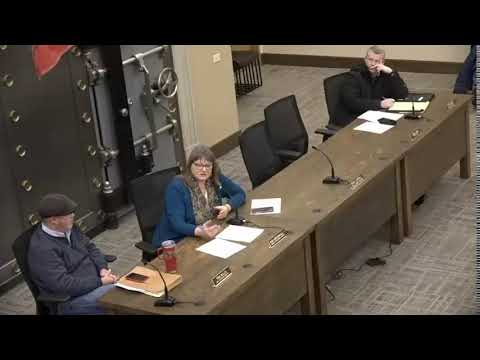
Keokuk council hears detailed TIF briefing as city weighs contribution to costly sewer-separation work
Summary
Financial advisers told Keokuk City Council that tax-increment financing (TIF) can help pay portions of future sewer-separation work required under a U.S. EPA consent order, but using TIF for new projects reduces available funds for sewer debt and borrowing capacity. Staff will review urban-renewal plan language and bonding options before decisions.
Financial advisers described how Keokuk’s tax-increment financing (TIF) revenues could help pay for sewer-separation work tied to a U.S. Environmental Protection Agency consent order, but stressed trade-offs between redirecting TIF dollars to new projects and preserving capacity to contribute to a projected sewer program.
Tim Oswald of Piper Sandler told the council at a Jan. 16 workshop that the city’s current TIF value is roughly $38.5 million and that TIF collections generate about $1.57 million–$1.6 million in the current budget year. After existing TIF-backed bond payments — which Oswald said total just over $1 million next budget year — the city has an estimated annual surplus of roughly $600,000 before new borrowing.
That surplus, he said, could be used as a revenue source to repay bonds for eligible urban-renewal projects. “For every dollar you borrow for this is a dollar that’s not available for sewers,” Oswald told the council, urging members to weigh priorities before committing TIF funds to new projects. He noted the city’s prior bond structures create uneven debt-service schedules and that some large payments are pushed into later years, which affects long-term capacity.
Oswald outlined typical TIF-eligible work — street reconstruction, building rehabilitation and façade improvements — and cautioned that operational expenses such as staff or program funding are generally not TIF-friendly. He suggested that some workshop requests, such as Main Street’s façade and building rehabilitation work, may fit TIF criteria, while other requests tied to ongoing operations likely would not.
The presentation included a hypothetical planning contribution of $11.5 million of TIF toward a larger sewer program; Oswald said that even with such a contribution the city could still show an annual TIF surplus (illustrative only), but stressed the need to confirm figures as property valuations and taxing rates (Lee County, school district, city) are finalized.
Council members asked about the city’s overall bonding capacity and the commonly referenced $5 million street-bond figure. Oswald said he would calculate detailed capacity figures for staff and recommended the council engage the city attorney to ensure the urban-renewal plan permits any proposed TIF-funded projects. He proposed setting a public hearing for borrowing at the Feb. 13 council meeting as a possible next step to allow inclusion in next year’s budget if the council chooses to pursue bonded projects.
Oswald also reviewed bond-timing mechanics, IRS rules affecting certain borrowing thresholds and the efficiency gains of packaging multiple capital purposes into a single bond issuance to minimize fixed issuance costs.
The council heard an engineering update from city staff and engineers that the first-flush study required by the EPA consent order is poised to begin, with rain gauges and flow meters in place and with planned rehabilitation work at a vault under Third and Des Moines to support the study. Staff said the study could identify lower-cost underground storage or vault options rather than larger tunnel solutions previously discussed.
Next steps: Oswald will provide bonding-capacity calculations to city staff, and staff will consult the city attorney to confirm urban-renewal plan language and TIF eligibility for proposed projects before the council considers formal bonding or TIF commitments.