Get Full Government Meeting Transcripts, Videos, & Alerts Forever!
Get email alerts on the Species Conservation topic
No spam. Unsubscribe anytime.
Researchers tracking rare Guatemalan tree lizard find limited movement, urge habitat structure and assisted‑movement planning
Summary
Researchers presenting to the Greenville Zoo described new radio‑telemetry data showing a tiny, canopy‑dwelling lizard (referred to in the talk as Abonia cambula) has very small routine ranges and fragmented habitat; they said corridors must include specific tree species and epiphytes and that assisted translocation may be required for recovery.
A team of conservationists described multi‑year field work and early radio‑telemetry data on a tiny, tree‑dwelling lizard endemic to a small mountain range in eastern Guatemala, saying the species’ restricted forest remnants and limited routine movement raise difficult management choices for recovery.
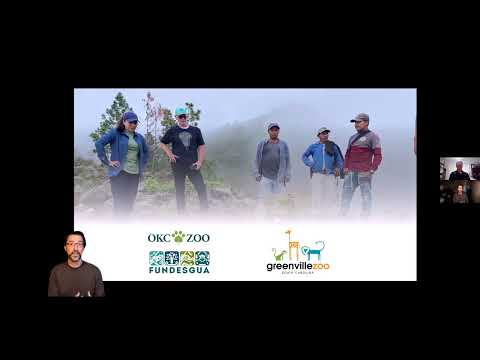
"This is the dragon. This is the Abonia cambula," said Thomas Shri, field director for the Foundation for the Endangered Species of Guatemala (Fundesqua), as he opened a Greenville Zoo conservation lecture on the species and its cloud‑forest habitat. Shri said the lizard lives almost entirely in the canopy, is cryptically colored and hard to observe, and was only described to science in 1992 — when authors warned the species “may soon become extinct.”
Shri and collaborators, including Dr. Brad Lockach (co‑founder of Fundesqua and coordinator of Guatemalan conservation programs at the Oklahoma City Zoo and Botanical Gardens), said the species’ range is limited to an isolated mountain range (Potero Caro) and that much of that landscape has been converted to agriculture, plantations and pasture. "We estimate that only about 3% of the area can still be classified as natural forest," Shri said.
The research team has combined drone mapping, community outreach and a field telemetry program to learn how the lizard uses habitat. Shri described the practical difficulties of tagging a small, arboreal animal, noting early methods caused tail loss and required redesign. The present method secures a small radio transmitter to the tail with waterproof tape; a limitation is that the lizards shed their skin in a single piece, which can leave the transmitter inside the shed skin. "Shedding occurs approximately every four months," he said, which constrains long‑term continuous tracking of single individuals unless transmitters are refitted prior to shedding.
Field relocations and behavioral observations produced two contrasting patterns. In heavily altered pasture landscapes, individuals often remain on a single isolated tree for years — "we found the same individuals in the very same trees after eight years," Shri said — suggesting very low routine movement. In more intact forest patches some animals moved hundreds of feet and even spent weeks using the forest floor, indicating occasional capacity for more extensive movement under the right conditions.
Those findings led the team to three management conclusions. First, colonization of restored corridors by the species is likely to be generational and slow because routine movement and home ranges are small (Shri stepped through home‑range observations that he said were roughly a 25‑foot radius for many individuals). Second, corridor design must prioritize functional structure, not only tree planting: Shri emphasized the importance of the correct native tree species, a maintained understory and the presence of epiphytes such as bromeliads that the lizards frequently use as refuges. "If bromeliads are consistently used as refuge or water sources then restoration strategies cannot focus only on trees," he said. Third, the team raised assisted movement (translocation of adults or offspring) as a management option that may be necessary to populate restored habitats — a measure Shri described as serious and not to be undertaken lightly, requiring robust data.
Shri and Lockach described extensive community engagement and on‑the‑ground restoration: the project already produces about 35,000 native seedlings per year and has planted more than 170,000 trees, working with private landowners and local communities who provide planting sites and nursery space. Shri said municipal authorities have recently begun to take interest and that national enforcement of wildlife protections remains limited, even though collection and sale of the species are illegal under Guatemalan regulations cited in the talk.
In the question period, Shri answered queries about predators (birds of prey), lifespan (field evidence suggests individuals can live 8–15+ years but exact lifespan is uncertain), diet (primarily caterpillars and similar insects), and reproduction (the species is livebearing). On population size, Shri said current estimates are uncertain: IUCN listings offer numeric estimates, but the team considers true population size unknown and emphasizes that even large local abundances are vulnerable if a few old trees are cut.
The presenters said the research will continue and stressed the need to combine scientific evidence, community cooperation and careful policy choices. "The future of this species will depend not just on how much forest we plant but actually how intelligently we design the whole conservation program," Shri said. The session closed with the Greenville Zoo noting the lecture recording will be posted on its website and announcing the next lecture.