Get Full Government Meeting Transcripts, Videos, & Alerts Forever!
Get email alerts on the Local Option Sales Tax topic
No spam. Unsubscribe anytime.
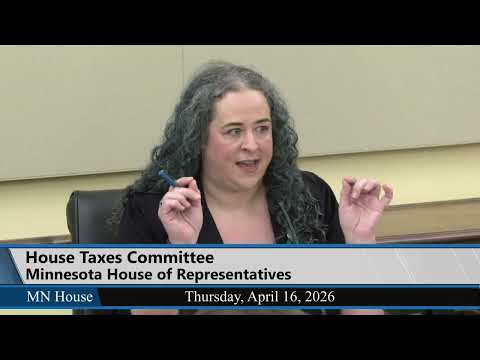
House Tax Committee hears marathon of local-option sales tax requests; chair urges statewide approach
Summary
The Minnesota House Tax Committee heard more than a dozen local-option sales tax proposals—authorities, mayors and county officials asked to send referendums to voters for projects ranging from pools to jails—while committee leaders warned piecemeal approvals risk deepening geographic inequities.
The Minnesota House Tax Committee heard dozens of requests on April 15 for special local-option sales taxes that would let voters decide whether to fund community centers, courts, arenas, pools and public-safety buildings.
Chair Gomez framed the hearing with a warning: local sales taxes are statutory exceptions and ‘‘we kind of made a deal back in the days of the Minnesota miracle’’ to fund public services from statewide resources, she told the panel. ‘‘Local sales taxes are expressly prohibited in state statute. And every bill that we're hearing today is an exception to that prohibition,’’ she said, urging members to consider the equity consequences of allowing piecemeal taxation.
Why it matters: Committee members heard projects that proponents say serve broader regions, but chairs and several members emphasized that authorizing many one-off sales taxes effectively shifts the state's funding responsibilities onto local voters and can create unequal access to public goods. Representative G— (committee member) told members they had heard proposals totaling in the hundreds of millions of dollars, a line echoed later in the hearing when a member estimated the package at roughly $409 million in proposed tax authorizations.
The hearing covered a long list of measures. City and county officials representing small, rural and regional centers described aging infrastructure and argued that a local sales tax spreads costs to non-resident users. Proponents routinely said a voter-approved local sales tax is a more equitable way to share costs with visitors and regional users than relying solely on local property taxes.
Committee members asked repeated questions about legal authority, statutory fit and precedent. Several members called for a more systematic, statewide approach to funding public services rather than approving many one-off local options. Others said they supported giving local voters the chance to decide at the ballot box.
Outcome: Committee chairs and authors repeatedly moved bills to be "laid over" for possible inclusion in an omnibus tax measure. No final policy votes were taken on substantive approvals during the hearing; the bills will return to committee consideration as part of the Legislature's ongoing process.
The committee is expected to continue considering how to reconcile demonstration-of-regional-benefit rules in statute with the surge of local petitions for sales-tax referendums.