Get Full Government Meeting Transcripts, Videos, & Alerts Forever!
Get email alerts on the City Finance Bureau Report topic
No spam. Unsubscribe anytime.
Syracuse finance chief lays out staffing, audit and efficiency plans as BOA budget edges down
Summary
Newly appointed Commissioner of Finance Diana Estry told councilors the Bureau of Accounts’ proposed FY27 budget is slightly lower than FY26, explained staffing changes and urged consolidation of bank accounts and better software use to reduce manual work.
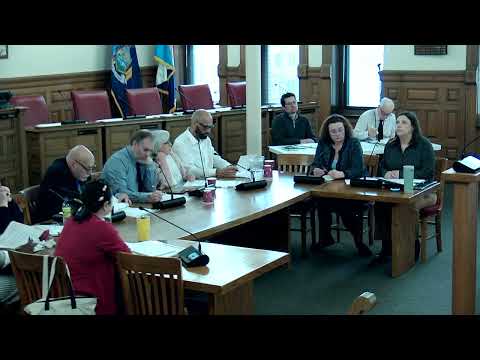
Diana Estry, who said she stepped into the role this month as Commissioner of Finance for the City of Syracuse, briefed councilors on Tuesday on the Bureau of Accounts’ work, budget and steps she wants to take to tighten operations.
Estry told the council the BOA handles the city’s transactions, bank accounts, reconciliations and project setups. She said the adopted BOA budget for fiscal 2026 is “about $839,000” and the proposed FY2027 BOA budget is roughly “$820,000,” noting she would provide a detailed line‑by‑line comparison after the meeting.
The nut graff: The briefing combined an operational review with early budget scrutiny. Estry described short‑term savings in salary lines driven by vacancies and an unfilled Deputy Commissioner post, and outlined near‑term changes — consolidating bank accounts, automating journal entries and improving grant reimbursement practices — intended to reduce administrative burden and steady finances as the city faces revenue pressures.
Estry said the department reduced budgeted salary dollars by funding one Accountant III instead of two and by reducing some vacant position salaries. On the Deputy Commissioner slot she said the position “was created last year in the budget” and has been vacant for about a year. She offered to send council members a more detailed comparison of last year’s and this year’s line items after the hearing.
On longer‑term structural pressures, a councilor said city expenses are increasing “at a much more rapid rate than our revenues.” Estry replied that BOA is using debt service, the general fund and savings “strategically to help us bridge any gaps in cash flow” and that she wants more frequent budget‑to‑actual reporting to identify where departments are overspending or holding unused project shells.
Estry described current outside relationships in the finance function. She praised the audit work of Bonadio Group and said the audit contract runs on a three‑year cycle. She also said consultants have helped BOA revamp grants workflows — a “Center of Excellence” effort — to improve reimbursement timing for grant‑funded projects.
Operational changes Estry proposed included consolidating what she estimated as “at least a good 30 bank accounts” to reduce reconciliation workload and better integrating existing software tools to avoid manually entering “hundreds of journal entries,” possibly using batch uploads or other automation.
She flagged training and professional development as a priority, noting BOA enrolled several staff in LinkedIn Learning and that more training dollars would help the team close skill gaps compared with peer cities.
On revenues, a councilor observed interest income has fallen; Estry said the estimate decreases interest income “from 9.5 to 7” (units not specified in the transcript) and that the BOA currently has slightly less invested than in prior years.
Estry said BOA is partnering with budget, FinOps and Neighborhood Business Development to integrate work into PeopleSoft and reduce translation from department‑level accounting systems.
The briefing ended when the Chair moved to recess for about 10–12 minutes; the motion was seconded and the meeting recessed.
What happens next: Estry said she will provide a more detailed budget comparison after the meeting and that some topics — FinOps staffing funded via the referenced “Sarah” program and more detailed project lists — will be taken up in later budget hearings.