Get Full Government Meeting Transcripts, Videos, & Alerts Forever!
Get email alerts on the Opportunity Zones topic
No spam. Unsubscribe anytime.
HUD secretary calls Opportunity Zones "transformative," cites program metrics and new rural focus
Summary
HUD Secretary Scott Turner said Opportunity Zones have driven large-scale private investment and lifted communities, highlighting roughly $100 billion in investment, 400,000 new housing units and a focus on expanding benefits to rural tracts under recently enacted law.
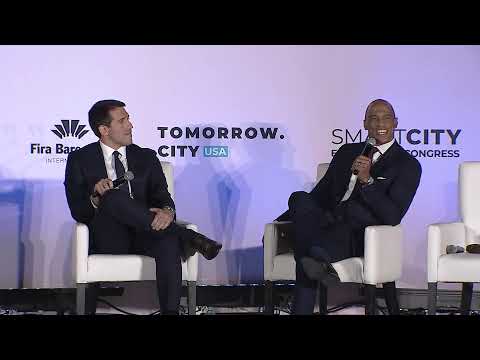
Secretary Scott Turner, head of the U.S. Department of Housing and Urban Development, told an audience in West Palm Beach that Opportunity Zones have been "transformative," and he offered a string of program metrics as evidence of success.
Turner said Opportunity Zones, created under the Tax Cuts and Jobs Act of 2018, "thus far have brought in about a hundred billion dollars of investment to our distressed communities across America," and he credited the program with supporting roughly 400,000 new housing units, about 500,000 jobs and "1 million people [who] have been lifted out of poverty." He also said home values inside Opportunity Zones rose about 3.4% while rents "remained the same."
Why it matters: The secretary framed Opportunity Zones as a continuing tool for revitalization after recent legislation made the program permanent. He said permanency, together with a 30% step-up in basis for investments, creates new incentives for projects — especially in rural areas, which he said constitute about 40% of Opportunity Zones.
Turner pointed to an administrative step he said will expand the program: the U.S. Department of the Treasury's recent release of roughly 25,000 eligible census tracts for an "Opportunity Zones 2.0" process, from which he said governors will select about 6,000 tracts for final certification. Turner described HUD's role as a convener, saying regional HUD officials will host roundtables to help local stakeholders plan and strategize for revitalization.
At the event, moderator Alfonso Jackson Jr. asked Turner how the program should change with the new law; Turner answered by urging investors, community leaders and elected officials to focus on building public-private partnerships and coalitions to support projects ranging from multi-family to manufactured housing.
What this doesn't establish: The figures Turner cited were presented as his administration's assessments during a public appearance and were offered without supporting documentation in the session. The claims are presented here as attributed statements by the secretary.
Next steps: Turner urged local leaders and investors to use the permanent program and the upcoming tranche of eligible tracts to plan projects. He said HUD and Treasury processes will continue into the coming months as governors and federal agencies complete selections and certifications.