Get Full Government Meeting Transcripts, Videos, & Alerts Forever!
Get email alerts on the Annexation topic
No spam. Unsubscribe anytime.
La Porte council introduces 1,280-acre East Annexation tied to Microsoft expansion after hours of public comment
Summary
The La Porte Common Council on April 13 introduced an ordinance to annex about 1,280.845 acres for a proposed Microsoft data-center expansion, heard more than two dozen public comments both supporting and opposing the project, and scheduled zoning and fiscal-plan reviews ahead of a May vote.
La Porte’s Common Council introduced an ordinance on April 13 to annex roughly 1,280.845 acres in Pleasant Township for what presenters said would be an expansion of Microsoft’s existing data-center campus.
The hearing and first reading followed a presentation by Bert Cook, executive director of the La Porte Economic Advancement Partnership, and Microsoft representatives who outlined a development timeline, conceptual site plans and mitigation commitments for water, power and noise. "Most modern data centers, including Microsoft’s project here in LaPorte, use closed-loop systems," Cook said, adding that Microsoft will use city water for "restrooms, kitchens, coffee" and truck in water for its closed-loop cooling system.
The city attorney, Mr. Otis, explained statutory next steps: zoning review by the area plan commission on May 12, a public fiscal-plan presentation in early May and a second reading of the annexation ordinance on May 18; if approved, the annexation would take effect 30 days after passage and publication.
Why it matters: The annexation would bring a large light-industrial zoning district into city limits and, according to Microsoft and local economic-development officials, new infrastructure investments, construction spending and a mix of temporary construction jobs and a more limited number of permanent technical positions that Microsoft and LEAP described as conservative estimates.
What proponents said: Supporters included LaPorte-area education and business leaders who emphasized school funding and workforce benefits. Dr. Sandra Wood, superintendent of LaPorte Community Schools, said the agreement could "change the future of our community" by creating local workforce pathways. Ryan Seaburg, president of the LaPorte School Board, said the school district would benefit under the redevelopment commission agreement and that a planned referendum could be avoided.
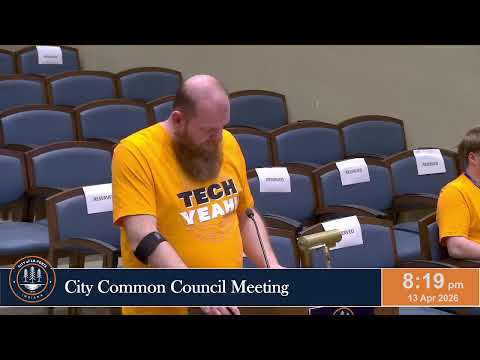
What opponents said: Dozens of residents urged caution, questioning transparency, drainage and water-disposal details, potential noise and air impacts, and long-term land-use outcomes. "I am totally 100% against this," said James Baum, a longtime LaPorte resident, arguing the project would "pollute" farmland and harm neighbors. Sue Anetsky asked council members not to expand city boundaries "while you're still in default functionally or practically on prior commitments." Tom Logwood and others pressed for drainage documents and material-safety data sheets for cooling fluids used in closed-loop systems.
Utilities and developer responses: NIPSCO’s representative described its GenCo model to separate large-load customers’ generation and transmission costs so existing customers do not carry those expenses. Microsoft’s community-affairs and permitting staff said the company intends to pay for required water and wastewater improvements and to invest in wetland and watershed projects; Meredith Eliza, Microsoft community affairs manager for Indiana, said the company has committed not to ask for municipal tax breaks on the project and described a roster of community investments and training commitments.
Next steps: The council approved introduction (first reading) of the annexation ordinance on a voice vote and set the plan commission zoning review for May 12 and the second reading and fiscal-plan presentation for May 18. Council staff said a public open house with Microsoft subject-matter experts is planned for April 21 at the Civic Auditorium for more detailed one-on-one discussions.
The council’s introduction does not finalize annexation; it advances the statutory process that requires zoning review, a published fiscal plan and subsequent readings before any annexation becomes effective.