Get Full Government Meeting Transcripts, Videos, & Alerts Forever!
Get email alerts on the Government Administration topic
No spam. Unsubscribe anytime.
Riley County commissioners debate administrator role, keep county counselor independent
Summary
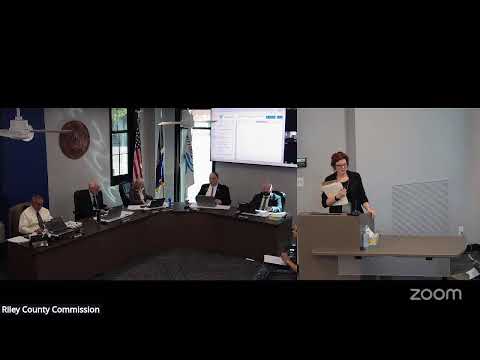
After a lengthy work session on April 16, Riley County commissioners agreed to keep the county counselor as a separate office and approved draft language giving a prospective county administrator authority to supervise administrative services and advise on hiring and discipline while reserving final hire/fire authority to the board.
Riley County commissioners spent much of their April 16 work session debating a planned reorganization and the role of a proposed county administrator, ultimately agreeing that the county counselor will remain a separate office reporting directly to the board while drafting language that would give an administrator supervisory control over administrative services but not the board’s final hiring and firing authority.
The board and staff discussed a series of governance questions introduced by Elizabeth Ward, the county human resources director, and by Jacob Anley, the county counselor. Ward asked whether contracts should be routed through the counselor and then the administrator, saying she had drafted language to capture that flow. Anley argued the counselor’s primary client is the board and urged that the counselor remain organizationally separate so legal advice could be given directly to commissioners. "The board of county commissioners is the client," Anley said, arguing that placing the counselor under an administrator could create conflicts when legal advice was needed.
Supporters of a stronger administrator role said the county needs someone who can manage day‑to‑day operations, improve substantive evaluations of department heads and carry out the county’s budget and policy priorities in an operational way. A number of department heads also spoke. David Adams, the EMS director, said he welcomed an administrator who can provide regular feedback and bridge the gap between elected officials and staff. "I like the idea ... of being able to come to the commissioners and talk to them," Adams said, describing the direct access department heads have now.
County appraiser Anna raised a counterpoint, warning the board to build safeguards around any transfer of power. She urged checks and balances to avoid concentrating excessive discretion in a single manager and noted that statutes and current policies already preserve certain appointment and appeal steps for appointed officers.
Faced with differing views, the commission settled on written language for further review: the administrator would "supervise administrative services, budgets, policies and strategies set forth by the Riley County Board of County Commissioners and advise the commissioners on hire, fire, discipline and evaluation of department heads." Commissioners then clarified, and directed staff to add an explicit sentence that the board retains sole authority to hire, fire and discipline department heads.
Staff agreed to circulate the drafted statement and a proposed position description for the administrator before the board’s next meeting, currently scheduled for April 27, so the commissioners can review the job description, proposed reporting lines, and recommended policy safeguards.
Why it matters: creating an administrator post would shift day‑to‑day operational responsibilities to a single executive and could change how the county handles human resources, contracting and budget execution. Commissioners emphasized they want the administrator to improve operational effectiveness while retaining board oversight on final personnel decisions.
The work session ended with no final hires or structural changes; the board asked staff to prepare a polished position description, an organizational chart showing the counselor as a separate office, and revised policy language for review at the next meeting.