Get Full Government Meeting Transcripts, Videos, & Alerts Forever!
Get email alerts on the Governance topic
No spam. Unsubscribe anytime.
Quorum Court adopts ordinance to send most ordinances and resolutions to committee
Summary
The court passed an amendment to ordinance 2021‑26 requiring ordinances and most resolutions to go to committee before full Quorum Court consideration; the County Counselor said exemptions remain for ceremonial resolutions and a two‑thirds bypass is available.
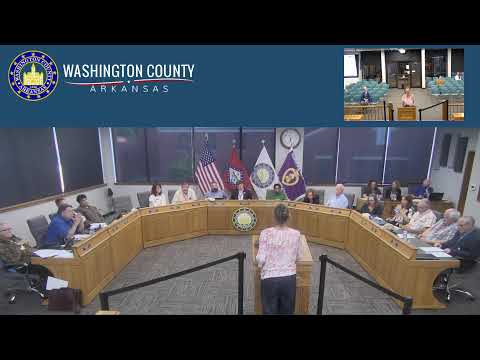
Justice Coger introduced and moved an ordinance to amend ordinance 2021‑26 so that ordinances and resolutions would routinely be reviewed in committee before coming to the full Quorum Court. "I just want to make a policy that's consistent so that resolutions and ordinances all go to committee before they come to the quorum court," Justice Coger said during the first reading.
The County Counselor told the court that some resolutions remain exempt from committee referral — including resolutions honoring individuals or entities, expressing appreciation, or authorizing mass marriage officiants — and that the Quorum Court retains the right to bypass committee review by a two‑thirds vote on the floor. Lou Reed Sharp, a Tonitown resident speaking during public comment, said the change would reduce time spent bringing non‑substantive items to the full court.
The court voted to pass the ordinance on final reading after a motion by Justice Coger and second by Justice Ricker. Why it matters: The change formalizes committee review as the default path for most measures, which proponents say promotes consistent public vetting and reduces surprise agenda items. Opponents or questions in the meeting focused on maintaining flexibility for ministerial and ceremonial matters.
Next steps: The ordinance takes effect per county rules; committees will be the primary venue for initial deliberation of ordinances and most resolutions, with the option for expedited floor consideration when two‑thirds of the court so vote.