Get Full Government Meeting Transcripts, Videos, & Alerts Forever!
Get email alerts on the Criminal Justice topic
No spam. Unsubscribe anytime.
Residents question expansion of Community Rebuilding Initiative, urge funding for pre‑trial services
Summary
At the April Washington County Quorum Court meeting, public commenters criticized proposed additional funding for the Community Rebuilding Initiative (CRI), saying the program has expanded beyond a pilot, costs have risen sharply, and county priorities should favor evidence‑based pre‑trial services.
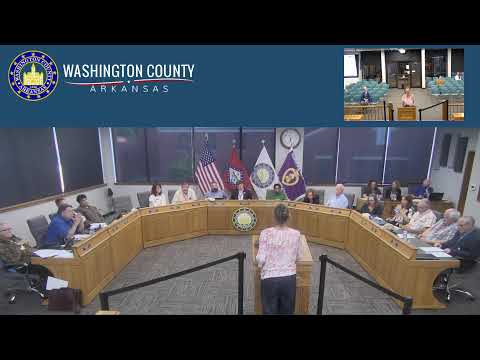
Diana Scott urged the Washington County Quorum Court to halt plans to increase funding for the Community Rebuilding Initiative, saying at the April meeting that the program remains a “detention setting” and that county taxpayers deserve more transparency about proposed spending.
Scott, who identified herself as a Fayetteville resident, said she opposed a proposed $2.5 million funding increase and called CRI “a boutique pet project” that serves a narrow population while many in Washington County lack pre‑trial services. “I question the validity of pouring more of our tax dollars into what would seem to be a boutique pet project,” she said.
The concern was echoed by Grace Wisher, who said the CRI had evolved from “a 3‑month pilot program” into a general‑fund initiative with projected outlays of $8 million over three years. Wisher said initial CRI costs rose from a quoted $150,000 to over $930,000 and that the county has shifted away from federal ARPA funds toward millions in local dollars to support the program. She also said she had heard reports of an $18 million jail expansion with water and drainage issues and limited public tracking of construction progress.
Why it matters: Commenters framed the dispute as both fiscal and programmatic. They urged the court to consider evidence‑based pre‑trial models that, they said, could serve larger numbers at lower cost. Scott said pre‑trial services have been “documented to be far more effective” and alleged such programs could save the county about $5 million annually (her figure as provided in public comment).
Court response and next steps: There was no substantive reply in the public portion of the meeting from county staff or elected officials providing detailed budget or program metrics. The public comments were recorded during the three‑minute comment period; no vote or directive on the CRI funding proposal occurred during the meeting.
Context: The speakers said the CRI was initially justified as a low‑cost, grant‑funded drug treatment pilot; they allege it now relies on larger local appropriations and new sheriff’s‑office positions to sustain operations. The county’s formal budget deliberations or staff reports would be the venue to test those claims and to provide sourcing for cost and scope figures referenced in public comment.