Get Full Government Meeting Transcripts, Videos, & Alerts Forever!
Get email alerts on the Opioid Abatement topic
No spam. Unsubscribe anytime.
Coffee County committee approves opioid-abatement grants, requires monthly invoices and quarterly reports
Summary
The Coffee County Opioid Abatement Funds Disbursement Committee approved funding for the 14th Judicial District Public Defender's Office, Be the Bush and Miriam House and adopted monthly invoicing and quarterly accountability reporting; it also transferred $5,611.28 from a prior grant year into the current budget. Recipients face potential clawback or ineligibility if they fail to comply.
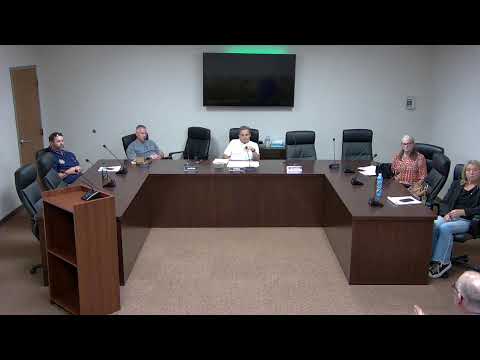
The Coffee County Opioid Abatement Funds Disbursement Committee on April 16 approved disbursements for three recovery programs and set new oversight requirements meant to ensure recipient accountability.
Judge Robert Carter, speaking as a committee member, moved to transfer $5,611.28 of unspent 2024 funds into this year’s budget to cover a shortfall for an applicant; the motion was seconded and carried. The panel also unanimously approved continued funding for the 14th Judicial District Public Defender’s Office and new awards to Be the Bush and Miriam House, subject to monthly invoicing to the county finance office and quarterly reporting to the committee.
Why this matters: Committee members said they want to balance immediate client needs against the desire to preserve a reserve for programs that lack alternate funding. Investigator Lee Nettles presented the county’s account history and projections, telling the committee Coffee County received $229,845.90 in 2025 and is expected to receive approximately $150,683.42 in 2026; separate Brown Greer settlement monies totalled $476,027.17 and can be used if state-disbursed funds are delayed.
What the committee approved and why: The public defender’s office, a prior recipient, was approved for continued support because it already operates under an invoiced, line-item process that pairs payments to documented payroll and services. "They earn their money and then get paid," one member said in describing the public defender's invoicing practice.
For the two nonprofit applicants, the committee adopted a unit-rate, month-by-month payment model. The Be the Bush application sought $96,700 for 20 participants through a four-month Phase One; committee math presented a per-person-per-month rate to be invoiced monthly and reconciled quarterly. Miriam House asked for $63,200 for 10 participants under the same four-month Phase One and would follow the same invoicing rules. The committee emphasized that invoices should be itemized (payroll, benefits, educational materials, housing costs, etc.) and that payments should be pro-rated if participants leave mid-month.
Reporting and enforcement: Members voted to require all past and future recipients of opioid-abatement funds to complete the county’s accountability forms and submit reports to the mayor’s office, which will forward them to the committee. The chair said failure to appear or submit required reporting "might result in clawback of funds and inability to receive future funding." The committee agreed to make monthly payments contingent on receiving invoices and to require quarterly program presentations or written reports.
Next steps and schedule: The committee set its next meeting for May 14, 2026, at 5:30 p.m. to receive end-of-year accountability reports from recipients and to consider any additional applications. Committee staff said they would send the reporting template and the county’s policies and procedures as attachments via the mayor’s office.
Details to note: Lee Nettles told members that interest earned on the abatement account accrues to the abatement fund (not the general fund). Committee members discussed that state reporting timelines typically constrain spending for a given allocation to roughly two years unless the county coordinates an extension with the state. Members also debated the practical difficulty of verifying a participant’s county residency once they are in out-of-county treatment; the committee settled on a "Coffee County nexus" standard rather than strict residency documentation so as not to bar people from services.
The panel adjourned after confirming motions and scheduling the next meeting.