Get Full Government Meeting Transcripts, Videos, & Alerts Forever!
Get email alerts on the Drug Policy topic
No spam. Unsubscribe anytime.
Hart County commissioners direct staff to draft ordinance targeting unregulated synthetic opioids
Summary
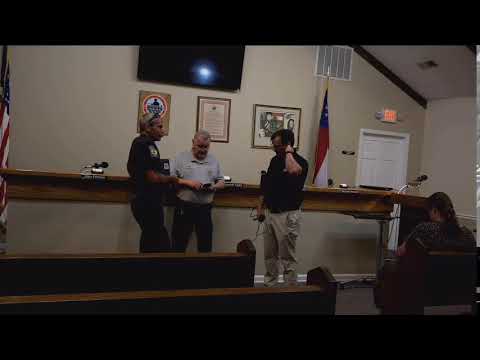
On April 14, 2026, the Hart County Board of Commissioners voted 3-0 to direct staff to draft county-level regulations aimed at unregulated synthetic opioids (products referred to in the meeting as “7‑O”), citing rising adverse-event reports and local availability at convenience stores.
The Hart County Board of Commissioners voted 3-0 on April 14 to direct staff to draft a county ordinance aimed at limiting the sale of unregulated synthetic opioids referenced repeatedly during the meeting as “7‑O.” The motion asked staff to work with the sheriff’s office and, if needed, seek guidance from the state attorney general’s office.
The item was introduced by the chair, who said he had been contacted by a concerned resident and read excerpts of an FDA advisory about a potent opioid derivative found in some kratom-derived products. “We can just do nothing or we can take a stance on this, and I don’t believe it’s good for our community,” the chair said, asking staff to consider ordinance language and examples the board could review.
Kim, a county staff member who researched local precedents, told the board she found a city ordinance in Milton that regulates unregulated marijuana and opiate substitutes but said those local rules may not apply where a compound is already regulated by state law. “I tried to find another one across the state…city attorney pulled the stops on it and said, you know, I don’t think that we can defend this,” Kim said, cautioning that counties may face legal challenges if a product is already covered by state regulation.
Commissioners discussed enforcement options, including educating retail sellers about existing state restrictions (the state recently raised the minimum purchase age to 21 for some products) and coordinating with local law enforcement. Commissioner Teasley moved—seconded by another commissioner—to task Kim with drafting proposed county regulations for products not covered by state law; the board approved the motion 3-0.
During discussion the board referenced an FDA advisory and cited an academic finding noted in the meeting that the compound under discussion has been described in at least one journal as significantly more potent than morphine; the board did not adopt or ratify any scientific finding but cited those reports as part of the public-health concern motivating local action. Commissioners asked staff to coordinate draft language with the sheriff’s office and to seek input from the state attorney general’s office on defensibility before bringing a draft back for review.
Next steps: staff will prepare draft ordinance language and circulate it to the commissioners; the board expects to review the draft at a future meeting pending legal review and sheriff’s-office input.