Get Full Government Meeting Transcripts, Videos, & Alerts Forever!
Get email alerts on the School Mental Health topic
No spam. Unsubscribe anytime.
Sayville district highlights mental-health supports, partnerships and student voice
Summary
The Sayville Union Free School District's Pupil Personnel Services team outlined prevention-focused mental-health supports, staffing levels and long-term community partnerships, and LIAB shared survey results it says show reduced cyberbullying after a cell-phone ban.
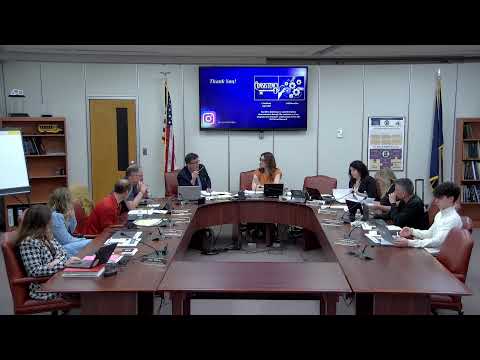
The Sayville Union Free School District on Monday heard a detailed presentation from its Pupil Personnel Services office about districtwide mental-health and anti-bullying work, including staffing, program integration with curriculum and long-term community partnerships.
Assistant Superintendent for Pupil Personnel Services Miss Julian Mris led the presentation and said the district's approach emphasizes prevention and sustained relationships rather than one-off assemblies. "Every child is one caring adult away from being a success story," she said, stressing the district's emphasis on trusted adults, cross-building collaboration and routine follow-up small-group work after larger events.
Mris gave concrete staffing numbers for PPS supports: two social workers and a psychologist at both the middle and high school levels; a social worker and a psychologist at each elementary school; four guidance counselors at the high school and three at the middle school. She said the staffing and programming are intended to be preventative and integrated with curriculum through the district Strides/SEAL framework.
Joe Salamone, executive director and founder of the Long Island Coalition Against Bullying (LIAB), described an embedded partnership with Sayville that began in 2019 and operates across four areas: external support services, community participation, support for building and district initiatives, and education. Salamone described LIAB services such as a Monday'Friday hotline, confidential case consultations, resilience programs and financial subsidies meant to remove cost barriers for families.
Salamone presented survey findings from classroom push-ins and larger district sampling. He said the high-school sample of 156 students aligned closely with a 4,041-student Long Island sample, and noted that "we do believe that the 17 point drop in cyber bullying is reported by students can in some way be connected back to the cell phone ban." He acknowledged the difficulty of proving causation but framed the drop as evidence worth considering alongside other data.
Student voice figured into the presentation: Anthony, the student board member and co-chair of the climate advisory committee, reported that students feel more connected when engaged in community service and said the cell-phone ban has increased presence and interactions at lunch, even though students "mostly" dislike the rule. He and other students asked for more grief-management training and peer-support skills.
PPS staff described several concrete initiatives: monthly elementary Strides push-in lessons taught by a district social worker; wellness and mindfulness rooms at the high school and middle school; trauma-informed classroom training delivered at each building'level faculty meeting with deeper multi-session options for staff; and adoption of a NASP PREPARE crisis-response framework, documented in a red binder for administrators and trained teams to use in a crisis.
The presenters also highlighted long-running partners listed in board materials, including the Long Island Coalition Against Bullying, Family Service League, Stony Brook University, the American Foundation for Suicide Prevention and local law enforcement, and public events such as the Strides Carnival and a planned Gabby Petito Foundation visit.
Asked during public Q&A how the district selects outside organizations and measures effectiveness, Miss Julian Mris said most partners are vetted before working with students and noted the district already uses student surveys and some behavioral metrics. She cautioned that increased reporting following education can reflect improved reporting rather than an increase in incidents.
The presentation concluded with the district thanking staff and volunteers and noting upcoming events and the district's plan to continue integrating Strides themes into curriculum maps. The board did not take formal new action on policy during the presentation; the meeting later proceeded to routine agenda items and appointments.
The district's next board meeting will include the budget adoption and a public budget vote, the board announced.