Get Full Government Meeting Transcripts, Videos, & Alerts Forever!
Get email alerts on the Municipal Budget topic
No spam. Unsubscribe anytime.
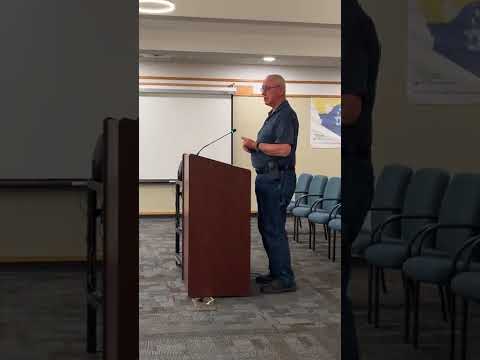
Hope Mills residents press town board over $22 million budget, property revaluations and public-safety funding
Summary
At a June 2 public hearing on the proposed $22 million FY2025-2026 budget, residents told the Hope Mills Town Board that revaluation-driven tax increases threaten fixed-income homeowners and pressed for more funding for police, parks and basic maintenance; the board will review comments at a June 16 workshop.
Residents told the Hope Mills Town Board on June 2 that the proposed $22 million FY2025-2026 operating budget will burden homeowners after a recent revaluation and asked the board to revisit several line items, especially public-safety staffing, parks maintenance and certain discretionary purchases.
The board opened the public hearing after Mayor Jesse Bale Flowers summarized the process and said the proposed operating budget is about $22 million and still under consideration. “It's $22 million to provide services for the next year,” Mayor Flowers said.
Why it matters: Several speakers said steep upward changes in property valuations will translate into much higher tax bills for long-term residents on fixed incomes. Norah Armstrong, who said her home’s assessed value nearly doubled in the county revaluation example she gave, warned: “I would hate to see that happen to Hope Mills.” Her comments called attention to the distributional impact of revaluation-driven revenue increases on elderly and fixed‑income households.
What residents asked for: A mix of requests and concerns emerged during the hour of public comment:
- Public safety and staffing. Multiple speakers urged increased funding for police and fire to respond to population growth and anticipated traffic from regional road projects. Several said reduced overtime and low overnight staffing levels leave the town vulnerable; one speaker who identified as a law-enforcement veteran said the town needs to “have something in place” before crime increases.
- Taxes and revaluation. Speakers argued that although the town’s unit tax rate may change, higher assessed values can still raise homeowners’ bills substantially. Residents asked the board to consider targeted cuts or timing mechanisms to ease the near-term burden on people on fixed incomes.
- Parks, landscaping and special events. Several commenters urged modest, targeted spending for downtown and lake-area landscaping and maintenance. Marie Calendarer asked the board to “roll over” unspent appearance-commission funds rather than reclaiming them, so the commission can accumulate money for projects.
- Line-item scrutiny. Cindy Hamilton pressed staff on a jump in the training budget (she cited a rise from $4,000 to $18,000 in the proposed figures), a proposed $29,000 marquee, a $39,200 vehicle and the apparent removal of Old Mill Day funding.
- Animal control. The mayor clarified that the proposed budget does not include town-funded animal-control staffing because the county enforces animal control under county ordinance; related expenses are not budgeted in the town’s proposal.
Direct numbers and clarifications in the hearing included Mayor Flowers’ statement that a $2 million sales-tax-related expense is accounted for in the proposed budget and that the board must adopt an operating budget before the end of the month. Several residents offered personal calculations of likely tax‑bill increases tied to revaluation; the board did not adopt tax-rate changes at the hearing.
What the board will do next: The board will consider public comments and meet for a workshop on June 16 to review budget adjustments before taking final action. Mayor Flowers repeatedly stressed the budget is a work in progress and that staff will follow up on questions referred to the town manager and finance director.
Ending: The board closed the hearing after hearing from multiple residents and scheduled continued deliberations at the June 16 meeting; no final budget vote was taken that night.