Get Full Government Meeting Transcripts, Videos, & Alerts Forever!
Get email alerts on the School Construction topic
No spam. Unsubscribe anytime.
Unionville-Chadds Ford board stays cautious on middle school project, orders more analysis on Act 34, procurement and referendum costs
Summary
Administrators outlined options for the secondary campus: re-engage the architect on Act 34 compliance, consider hiring a construction manager/owner's representative during design, and weigh replacement vs renovation after new cost and site-development estimates raised projected costs. Finance staff said a 1% referendum exception would raise roughly $835,000 a year and cost the average homeowner about $85 in year one.
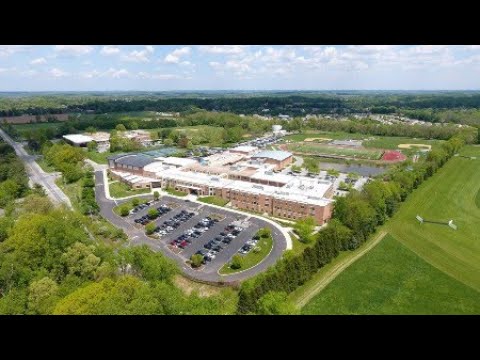
Unionville-Chadds Ford School District officials used a work session to walk the board through the complex choices facing the proposed middle school and broader secondary campus project, stressing the need for additional technical work before any formal commitment.
The superintendent framed the session as five focused topics: Act 34 (PlanCon) compliance, whether to bring on an owner's representative or construction manager as advisor (CMA), reasons the feasibility study recommended replacement instead of renovation, whether to phase separate site work or treat the campus as one project, and potential referendum financing. Administrators said they had told the architect to pause some design work while the district rechecks key assumptions.
“We have not violated the statute or law,” the superintendent told the board when summarizing legal advice on Act 34, “but we should re-engage Brelin to address the concerns the community shared and make sure we're holding them accountable for Act 34 compliance.” That legal review, staff said, focused on how rooms are counted (instructional versus non'instructional) and whether escalation and contingency assumptions were being included in PlanCon Part G calculations.
Board members and administrators traded specific examples of rooms that could be classed either way — a copy room, a team room or small-group space — and the effect those classifications would have on the district's aggregate building expenditure standard (ABES) calculations under Act 34. Staff stressed that the district's PlanCon submission must reflect how spaces will be used on “day one” at the hearing date, not potential future configurations.
Procurement and project oversight also drew sustained attention. Administration explained that a CMA (construction manager as advisor) typically joins in the design development phase to provide constructability reviews, independent cost estimates and to help package bid scopes; an owner's representative provides broader project leadership, risk management and community/stakeholder communications. “CMA is contracted to work for the owner in conjunction with the architect during the design phases,” a facilities official said. Several directors asked staff to collect RFPs used by other districts and to consult county intermediaries for common practice and pricing.
Replacement vs. renovation remained central. Staff reminded the board that the earlier feasibility study offered three options (maintain, renovate, replace) and that renovation scenarios have repeatedly shown operational complexity and high contingency needs. Administration said running a genuinely comparable renovation schematic would take roughly five to six months and an additional $400,000'$500,000 to produce a credible apples'to'apples comparison with the replacement design.
Site work and permitting pushed project cost projections higher. Administrators said more detailed studies identified an extra $12'$13 million in site development costs not captured in the original feasibility study, which helped explain an updated schematic estimate that rose from the earlier $120 million range toward about $140 million. Staff warned that breaking the campus into three separate land'development submissions could multiply permitting costs and create sequencing delays because most municipalities and regulators prefer an overall plan submitted once and phased in construction.
Finance staff outlined a financing option should the board seek voter approval to accelerate the timeline: a referendum creating an Act 1 exception of about 1 percentage point above the projected Act 1 index could generate roughly $835,000 in additional revenue per year. “For this year, a 1% tax increase would be about $85 for an average tax bill,” the finance officer said, adding that the added levy would compound year'to'year until major debt drops off around 2031. Administrators noted accelerating construction now could avoid projected escalation and possibly save tens of millions compared with waiting for debt drop'off years.
Next steps: the board asked administration to re-engage the architect on PlanCon/Act 34 concerns, gather RFP templates and CMA/owner's-rep benchmarking from neighboring districts and the Chester County Intermediate Unit, and return with a refined cost comparison (including a schematic-level renovation alternative) and draft procurement language. No vote was taken; the board scheduled further discussion for the next meeting.
What happens next: Administrators will obtain more detailed PlanCon and escalation analyses, assemble sample RFPs for a CMA and owner's representative, and present a revised comparative budget and a recommended procurement timetable at a follow-up meeting.